A U.S. Army sergeant found guilty of unleashing a terrifying shooting spree at Fort Stewart[1] has been sentenced to six life terms, capping off one of the most disturbing cases of betrayal inside the ranks in recent memory.
Sgt. Quornelius S. Radford, 29, faced military justice and was convicted of several counts of attempted murder after attacking his own unit and wounding five fellow soldiers, including his fiancé, during an August 2025 rampage.
According to the Army’s Office of Special Trial Counsel, Radford’s actions were nothing short of deliberate and cold-blooded.
On that violent day, the former automated logistics sergeant with A Company, 703rd Brigade Support Battalion, 2nd Armored Brigade Combat Team, 3rd Infantry Division, arrived at his unit headquarters armed and angry.
His target? The same soldiers he was sworn to fight beside.
The chaos began after an argument with his fiancé spiraled out of control, prompting Radford to drive to the installation with a loaded pistol.
His fiancé, reportedly worried that the soldier was suicidal, followed him onto the post in a desperate attempt to intervene.
Instead, Radford turned his weapon on him, firing before storming into his unit’s office to attack others in cold blood.
Inside, Radford shot four additional soldiers before attempting to fire on a fifth, missing only by chance. It was only because of the bravery and quick action of those in the building that more lives weren’t lost.
Fellow troops tackled the gunman, disarmed him, and immediately began administering lifesaving first aid to the wounded — true warriors even in the face of unimaginable chaos.
The Army confirmed that Radford was found guilty on two counts of attempted premeditated murder and four counts of attempted unpremeditated murder.
Image Credit: DoW
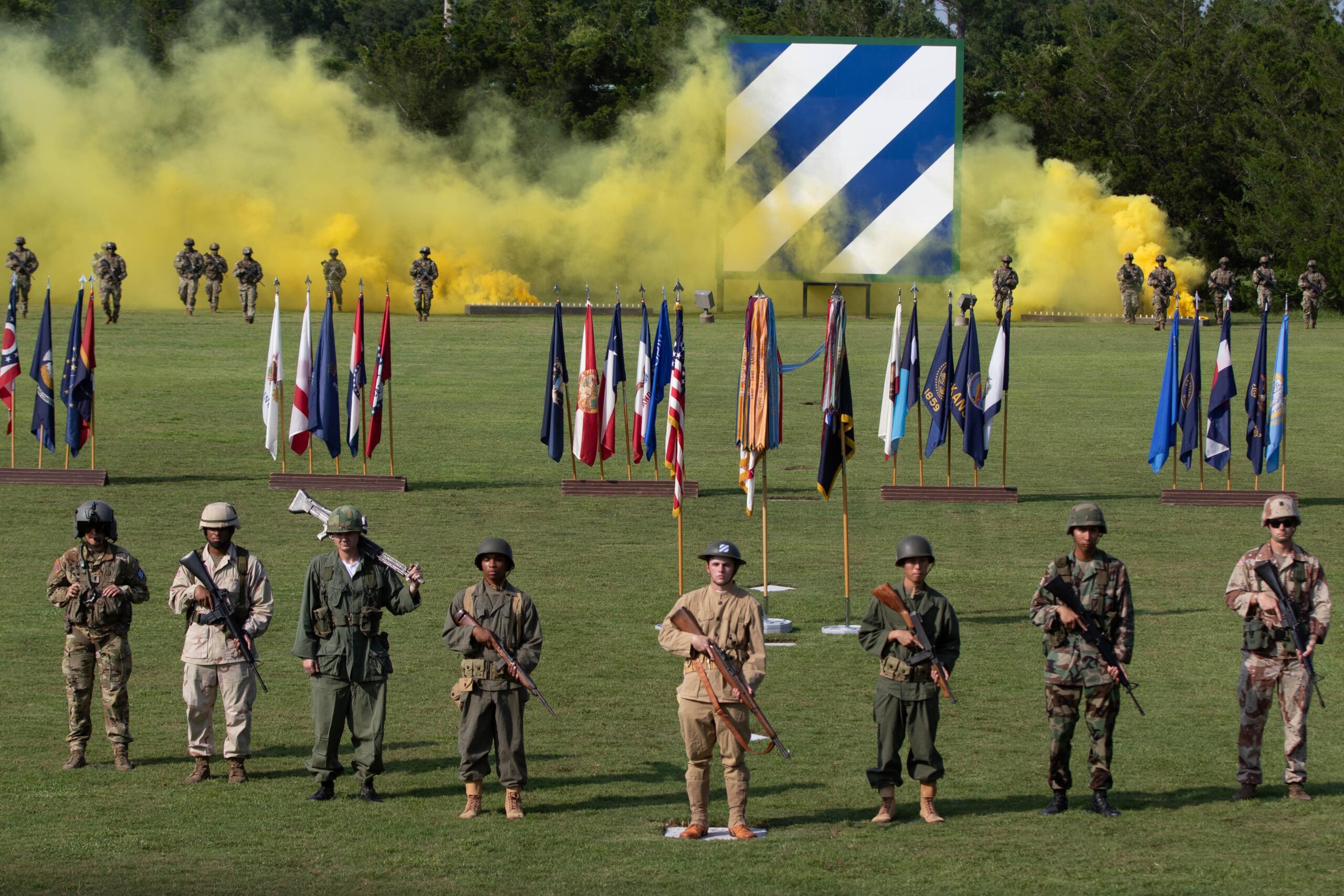
Soldiers assigned to the 3rd Infantry Division represent Soldiers from each era of the division’s history during the Salute to Summer Twilight Tattoo at Fort Stewart, Georgia, June 23, 2025. Salute to Summer is an annual multi-day celebration thanking Marne Soldiers and Families for their Service and sacrifice. (U.S. Army photo by Pfc. Darnell Howard).
Combined with additional convictions for domestic violence and aggravated assault with a dangerous weapon, the judge handed down six consecutive life sentences with the possibility of parole, alongside a dishonorable discharge, pay forfeiture, and reduction in rank.
Military prosecutors left no doubt about how deeply this act of violence struck the heart of the force. “Sgt. Radford turned his weapon on his own unit, shooting fellow soldiers, including members of his leadership, shattering the trust that is essential to every military organization.
His actions left victims with devastating physical injuries, emotional trauma and scars that will endure for a lifetime,” Maj. Matthew Fields stated.
Radford confessed fully to the shooting spree, and his road from uniformed soldier to convicted criminal will end at the United States Disciplinary Barracks at Fort Leavenworth, Kansas, where he’ll spend the rest of his life serving his sentence. While the court allowed for the technical possibility of parole, his chances of ever walking free again are slim.
Each of the six victims took the stand during the trial, sharing their firsthand accounts of the horror that unfolded that day. The Army reported that every one of them insisted Radford should face the maximum punishment available — a sentiment shared widely throughout his command and across the Fort Stewart community.
What happened next was a testament to the courage and professionalism the American military still stands for. Secretary of War Pete Hegseth has consistently emphasized the warrior ethos and moral integrity expected of every uniformed service member, and the soldiers who subdued Radford embodied those ideals when it mattered most.
Army Secretary Dan Driscoll presented the six who stepped up under fire with the Meritorious Service Medal, honoring their quick thinking and valor.
Fort Stewart’s 3rd Infantry Division has long been a proud symbol of discipline and resolve, and while this tragic event tested its spirit, it also revealed the strength within its ranks.
Soldiers came together to protect one another under extreme duress, proving once again that the American warrior tradition survives even the darkest moments.
The incident also reignited discussion on base security and mental stability within the ranks. Despite the military’s ongoing focus on mental health, no program can fully prevent an individual from committing acts of evil when driven by rage or instability.
This case serves as yet another reminder that personal accountability and vigilance remain critical components of unit readiness and resilience.
Radford’s sentencing made clear that the military justice system still has teeth when it comes to defending its own.
There was no leniency, no excuses, and no “understanding” of his crimes — just righteous punishment for turning a personal grievance into an act of violence against America’s own soldiers.
At its core, this tragedy is both a story of betrayal and of heroism — betrayal by one soldier who chose chaos, and heroism by those who refused to let it consume their brothers and sisters in arms.
While Radford spends his life in confinement, the warriors he wounded have already shown what true strength looks like: standing tall, refusing to back down, and keeping faith with each other even when one of their own broke that bond beyond repair.