Benjamin Franklin’s famous reply nearly 250 years ago still echoes: “It’s a Republic if you can keep it.” The Founders created a representative democracy where vigorous debate is not a bug but a feature. Americans have fiercely contested nearly every major issue since the nation’s founding, and decisions in Congress can hinge on a single vote.
That tradition of engagement is now being tested as the primary season gives way to the November general election. One clear takeaway from recent primaries is the striking contrast in voter energy. Republican turnout has been disappointingly low, while Democrats—despite fluctuating national approval ratings—remain highly motivated.
Data from multiple cycles since late 2025 consistently shows this gap. At the same time, President Donald Trump, though not at the top of the ticket, continues to exert firm control over the Republican Party. His endorsed candidates have prevailed in key races. In Louisiana, anti-Trump Senator Bill Cassidy was defeated decisively. In Texas, Trump-backed Ken Paxton crushed an anti-Trump challenger John Cornyn. Kentucky Congressman Thomas Massie was similarly ousted.
These primary successes demonstrate Trump’s enduring influence, but the critical question remains: will they translate into strong GOP turnout on Election Day?
Recently open-primary states offer a revealing snapshot. Pennsylvania and Georgia held primaries on May 19, exposing what I call the “GOP elephant in the room”—persistent Republican apathy alongside an energized Democratic base.
Georgia recorded its highest off-year primary turnout ever, exceeding 2 million ballots for a 28% participation rate, up from 22% in 2022. Yet the partisan split was telling: 52% of voters chose Democratic ballots compared to 48% Republican. Democrats showed particular strength in the metro Atlanta area, while Republican turnout in rural strongholds lagged behind 2022 levels.
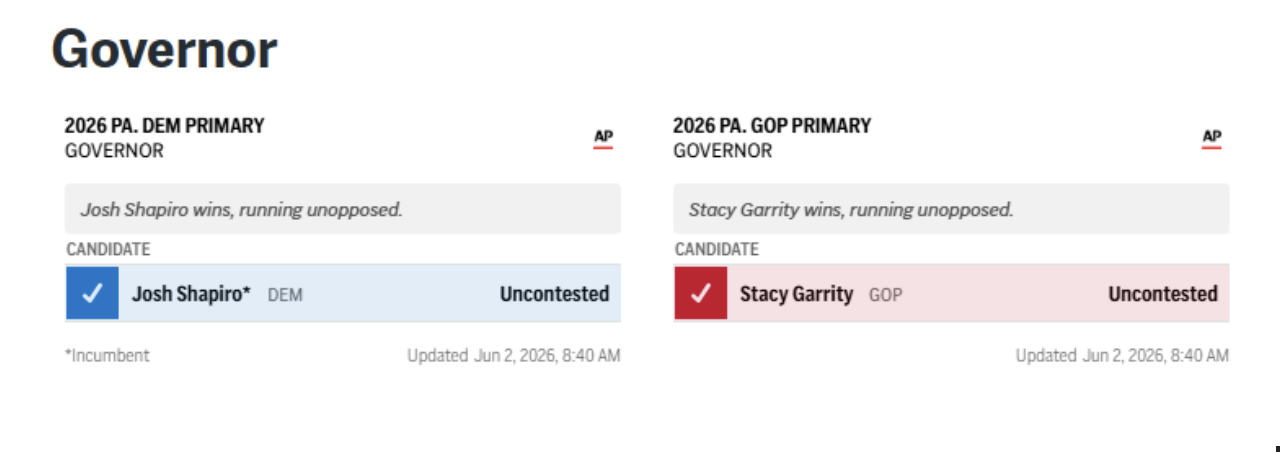
Pennsylvania’s 24% turnout was more typical for an off-year contest, but the imbalance was even sharper. Democrats accounted for roughly 57% of the vote, Republicans about 37%. The unopposed gubernatorial races illustrated the disparity vividly: incumbent Democrat Josh Shapiro received 1.1 million votes, while Republican Stacey Garrity drew only 641,000. Raw vote totals across these races, often overlooked in headline-focused coverage that simply declares winners, paint the concerning picture.
For several election cycles, Republicans drew strong motivation from two signature issues—securing the southern border and protecting the sanctity of life, abortion. Many conservatives viewed those battles as largely resolved. The southern border saw significant improvements after Trump took office in January 2025, and the Supreme Court’s Dobbs decision returned abortion authority to the states under the Tenth Amendment, consistent with republican principles.
With those galvanizing fears diminished, what replaces them? Democrats, by contrast, remain driven by apprehension over a Congress aligned with Trump. For Republicans, the energizing force should logically be the progressive policy agenda and its long-term consequences: renewed pushes for mandated vaccines, government misinformation boards that threaten free speech, aggressive renewable energy mandates including solar panels and windmills, forced electric vehicle adoption, Supreme Court expansion, DEI initiatives and “wokeness,” support for late-term and full-term abortions, and the growing influence of socialist voices within the Democratic Party.
Yet recent primaries, special elections, and 2025 contests reveal a troubling pattern—Republicans simply are not showing up at the polls. Some observers suggest external forces have successfully sown frustration and internal divisions among conservatives, while others point to dissatisfaction with legislative outcomes like the Save Act in the 119th Congress.
Whatever the causes, the numbers do not lie. If this apathy persists, historical patterns suggest Democrats could flip as many as 25 House seats and several Senate seats. Such gains would grind the Trump agenda to a halt, usher in two years of investigations and impeachment attempts, and potentially threaten the stability of the 47th presidency by removing Trump from office.
Conservatives cannot afford to rest on primary victories alone. The data points toward a difficult November unless turnout shifts dramatically. Politics is unpredictable—scandals can derail frontrunners overnight, as Gary Hart learned with the infamous picture from the boat, aptly named, “Monkey Business.”
There is still time between now and Election Day for momentum to change. Ronald Reagan captured the stakes perfectly: “Freedom is never more than one generation away from extinction. We didn’t pass it to our children in the bloodstream. It must be fought for, protected, and handed on for them to do the same.”
Republicans must re-engage now—by knocking on doors, making calls, and, at minimum, GO VOTE. The Republic remains ours to keep, but only if we actively defend it. The coming months will reveal whether Americans still possess the vigilance Franklin and the Founders demanded, or we accept Mamdani’s for America.