An American aircraft fired a precision Hellfire missile on Friday, slamming into the engine room of a cargo ship that tried to defy the U.S. blockade in the Strait of Hormuz.
The strike disabled the vessel instantly, sending a crystal-clear message that the United States will not tolerate violations of its maritime control zone.
According to U.S. Central Command, the Gambia-flagged M/V Lian Star ignored more than twenty warnings before the aircraft engaged.
The ship was attempting to sneak through the Gulf of Oman toward an Iranian port, a direct breach of the U.S.-enforced blockade. CENTCOM later confirmed the operation, specifying that the vessel was immobilized and is no longer advancing toward Iran.
This marks the fifth time since early April that U.S. forces have fired directly on a ship to disable it.
The blockade around the Strait of Hormuz — a crucial global energy artery — has been at the heart of the tense standoff between Washington and Tehran. Both nations have been enforcing competing blockades, making the narrow strait a geopolitical powder keg.
Marine tracking satellites had monitored the Lian Star for days.
The ship, which initially departed from Karachi, Pakistan en route to Iraq, reportedly attempted a diversion toward Iran. CENTCOM officials decided to take decisive action when it became clear the ship intended to break through.
The Hellfire strike into the engine room was described as “measured” and “precise,” meant to cripple the vessel without sinking it.
Image Credit: DoW
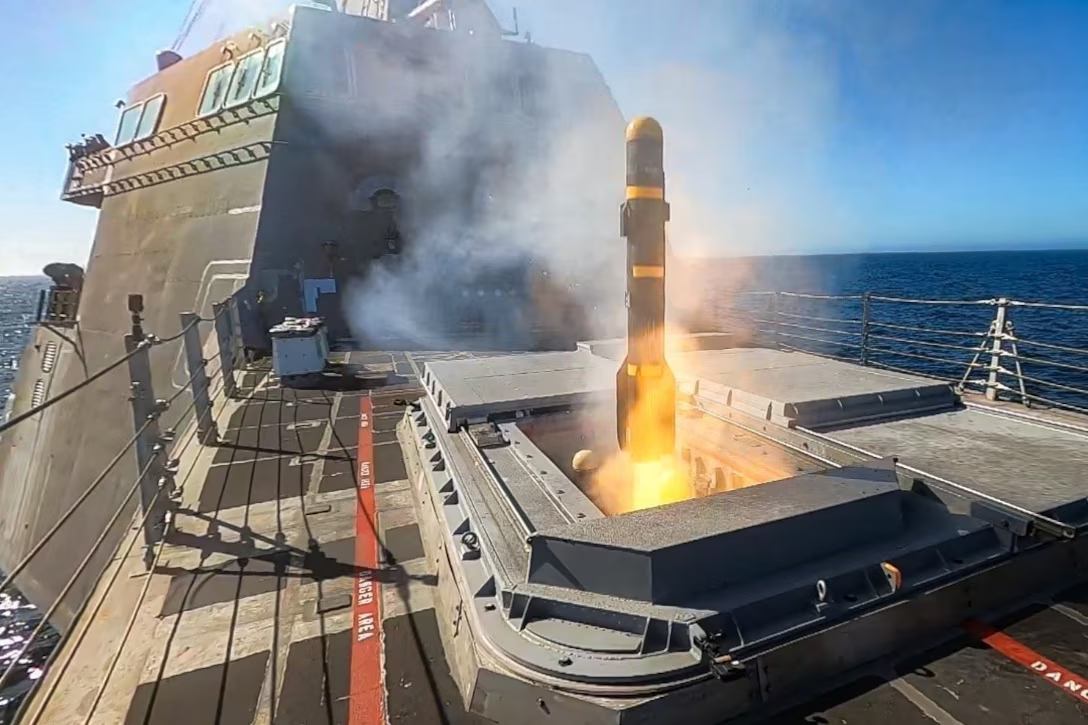
An AGM-114L Longbow Hellfire missile launches from the surface-to-surface missile module aboard the Littoral Combat Ship USS Montgomery in the Pacific Ocean, May, 12, 2022. The exercise was the first proof of concept launch of the Longbow Hellfire missile against land-based target.
The Pentagon did not release the names of the warships or aircraft involved. The cargo vessel remains adrift in the Gulf of Oman, awaiting recovery or boarding teams. As of Saturday evening, U.S. officials had no confirmation of injuries among the crew.
The strike was part of a larger campaign of enforcement that has already disabled five vessels and redirected 116 since April.
In a statement, CENTCOM emphasized that multiple warnings went ignored before the strike, underscoring U.S. patience throughout the incident.
“The ship was given every opportunity to comply,” said a senior military officer. “This was about maintaining lawful control of international waters under blockade conditions — not escalation.”
While large-scale combat between the U.S. and Iran has paused since April’s ceasefire, smaller flare-ups continue to erupt almost weekly. These range from intercepted Iranian drone flights to tit-for-tat missile incidents.
The Strait of Hormuz has become the flashpoint in a broader chess match involving energy flow, regional influence, and U.S. power projection.
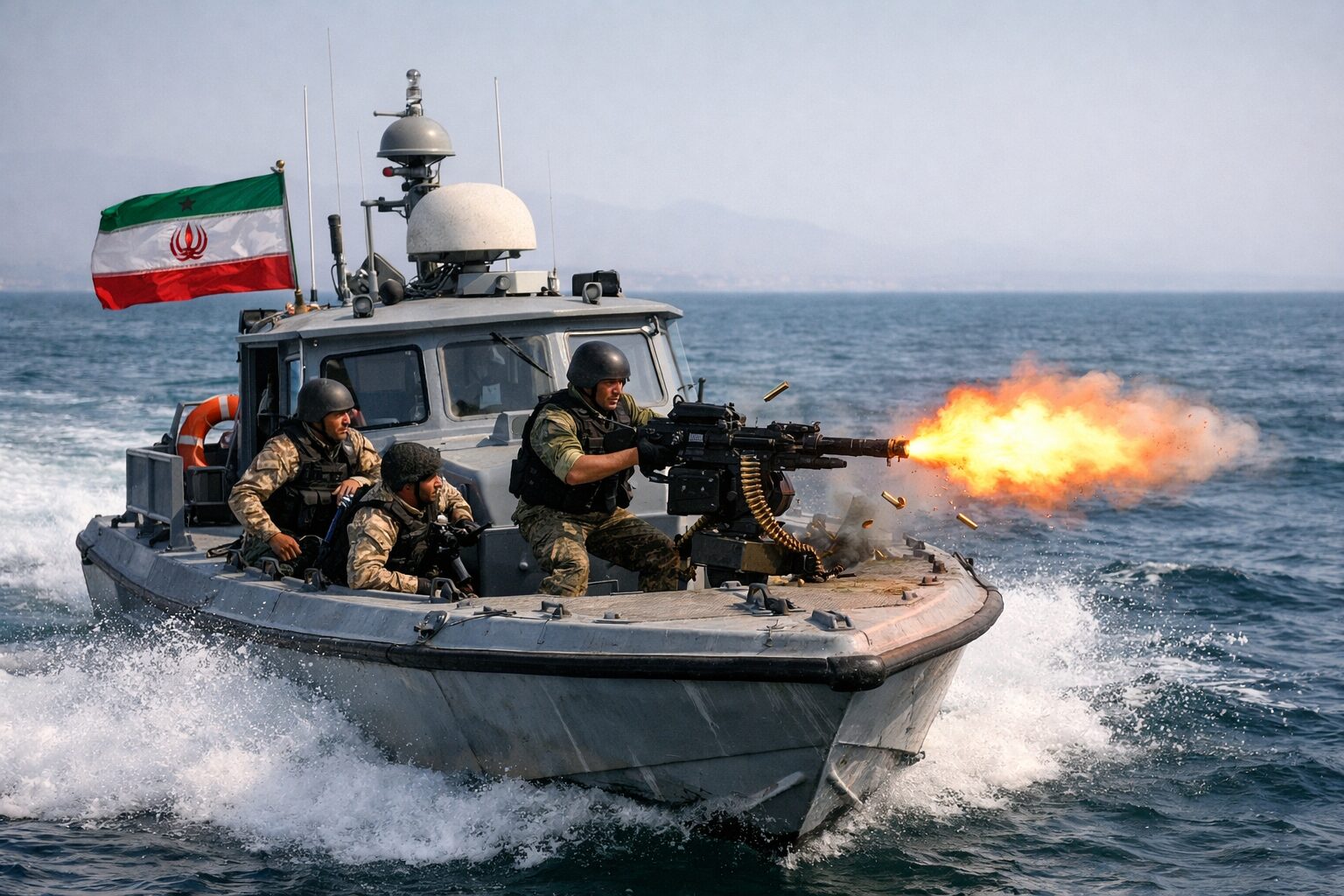
Image Credit: Pexels, George Bek
President Donald Trump’s leadership continues to send a clear message: America will defend its interests with strength and precision. On Friday, he hinted that the blockade “will now be lifted,” signaling that Washington may be willing to ease restrictions if Iran steps back from provocations. For now, CENTCOM says operations remain ongoing until ordered otherwise by the White House.
Despite this, Iran’s regime continues to act recklessly. Bloomberg reported that an Iranian missile strike on Ali Al Salem Air Base in Kuwait wounded five people, including American service members.
Kuwaiti air defenses intercepted the missile before impact, yet debris still caused minor injuries. U.S. forces responded earlier this week with strikes on targets near Bandar Abbas, hitting facilities linked to Iranian missile operations.
Since early spring, CENTCOM has focused on balancing controlled pressure against Iran’s aggressive proxies while avoiding full-scale escalation.
Each strike, boarding, or blockade enforcement reflects that strategy — containment without chaos. The Hellfire strike on Friday fits exactly within that doctrine of firm deterrence.
Image Credit: DoW
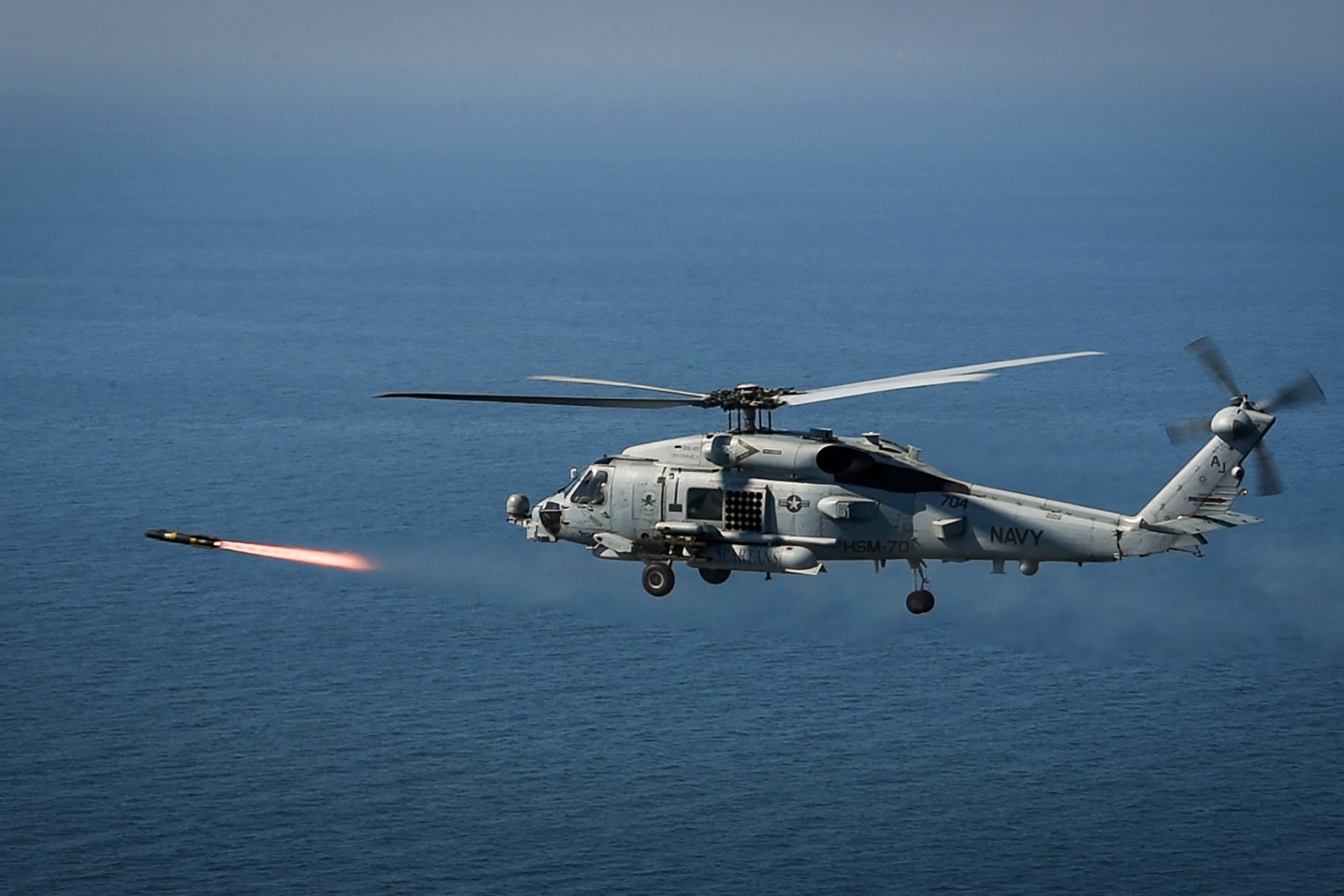
A Navy MH-60R Seahawk helicopter shoots an AGM-114N Hellfire missile during Exercise Baltic Operations in the Baltic Sea, June 14, 2019. The annual maritime-focused exercise enhances flexibility and interoperability among allied and partner nations.
America’s continued naval dominance in the Gulf is not just about oil or shipping lanes.
It’s about maintaining order against a regime that thrives on chaos. The mullahs in Tehran have long tried to exploit every perceived opening to move weapons, fuel, and hostages across international waters.
But this administration — led by Trump and backed by War Secretary Pete Hegseth — has made clear that the days of looking the other way are over.
The message heard worldwide after Friday’s missile strike is unmistakable: defy American warnings, and you’ll face consequences. No apologies, no lengthy “diplomatic consultations,” just precision force delivered at the exact moment necessary.
With both the United States and Iran negotiating around a fragile ceasefire, these incidents continue to test just how far each side is willing to go. For the Trump administration, enforcement comes before appeasement, and the U.S. Navy will maintain that posture until Tehran learns the meaning of compliance.
Image Credit: Beachside Stock
The Strait of Hormuz may be 21 miles wide at its narrowest point, but in terms of world power, it’s the most heavily policed stretch of water on Earth. American resolve — backed by firepower — ensures that freedom of navigation doesn’t bend to rogue states or blockade breakers.
At this stage, the Lian Star may be nothing more than a drifting reminder of what happens when a vessel challenges U.S. might.
The blockade still stands, U.S. control remains intact, and the next blockade violator will face the same fate.