Alyssa Farah Griffin took aim at her fellow co-hosts on “The View” over their early support for Graham Platner, the controversial Maine Democratic Senate candidate whose campaign later ended amid allegations, as reported [1] by The New York Post.
The exchange came Thursday during a discussion about whether character still matters for political candidates.
The conversation quickly shifted to Platner, whose candidacy had once drawn support from prominent Democrats, including New York Mayor Zohran Mamdani and Sen. Elizabeth Warren.
Farah Griffin first framed the issue as a broader problem for both political parties. “I don’t know that I’m convinced either party puts up the best people. I’m just going to be honest,” she said.
She then turned the criticism directly toward the panel and their earlier defense of Platner.
“Like I love you guys, but a lot of you guys defended a guy with the Nazi tattoo who is credibly accused of a number of things.”
Platner dropped out of Maine’s Senate race earlier this month. His exit came amid sexual assault allegations from a former partner.
After Farah Griffin raised the panel’s initial support for him, the other hosts quickly pushed back. Farah Griffin acknowledged that they had walked it back.
Joy Behar immediately distanced herself from the criticism. “Don’t look at me. I did not,” she said.
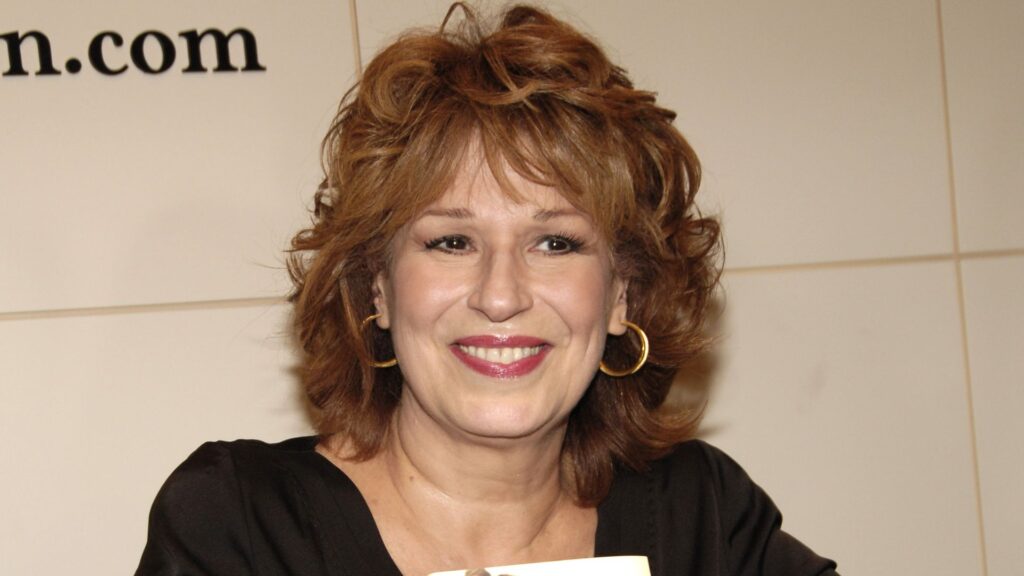
Sunny Hostin admitted she had backed him, but said she had not known the full picture at the time. “I did, but I didn’t know most of the background,” she said.
Hostin had said multiple times in recent months that she would support Platner. That support came despite the controversies surrounding him, including the Nazi-linked tattoo.
However, Hostin later said Platner should leave the race. That came after he faced multiple allegations of sexual abuse.
Whoopi Goldberg also addressed the tattoo controversy during the discussion. “I didn’t see that tattoo as a Nazi thing,” she said.
Goldberg said the matter was not for the panel to decide. She said it was up to the people voting in that state.
The conversation then moved toward a larger point about what voters now value most in candidates. Sara Haines argued that policy is no longer at the top of the priority list for many voters.
“People are looking for people with character, integrity,” Haines said. Her point put character and trustworthiness ahead of the usual campaign focus on policy positions.
“And policy, to me, is almost third, and I mean that deeply. That’s the policies almost everyone agrees on. The primaries pick the most extreme candidates because of how our system works, but they won’t win in general elections.”
The debate showed how quickly the panel’s discussion of political character turned inward.
Farah Griffin used Platner’s candidacy to challenge her co-hosts over their earlier position, while several of them responded by clarifying what they knew and when they changed course.
At the center of the exchange was the question of whether parties are offering voters strong candidates.
Farah Griffin said she was not convinced either side was doing so, and Platner became the immediate example in that argument.
The discussion also reflected a split over how responsibility should be handled when new information emerges about a candidate.
Hostin said she did not know most of the background when she supported him, while Behar said she had not supported him at all.
By the end of the segment, the panel had moved from a specific dispute over Platner to a broader argument about voter priorities.
Haines said voters are looking for character and integrity, with policy falling behind those concerns.