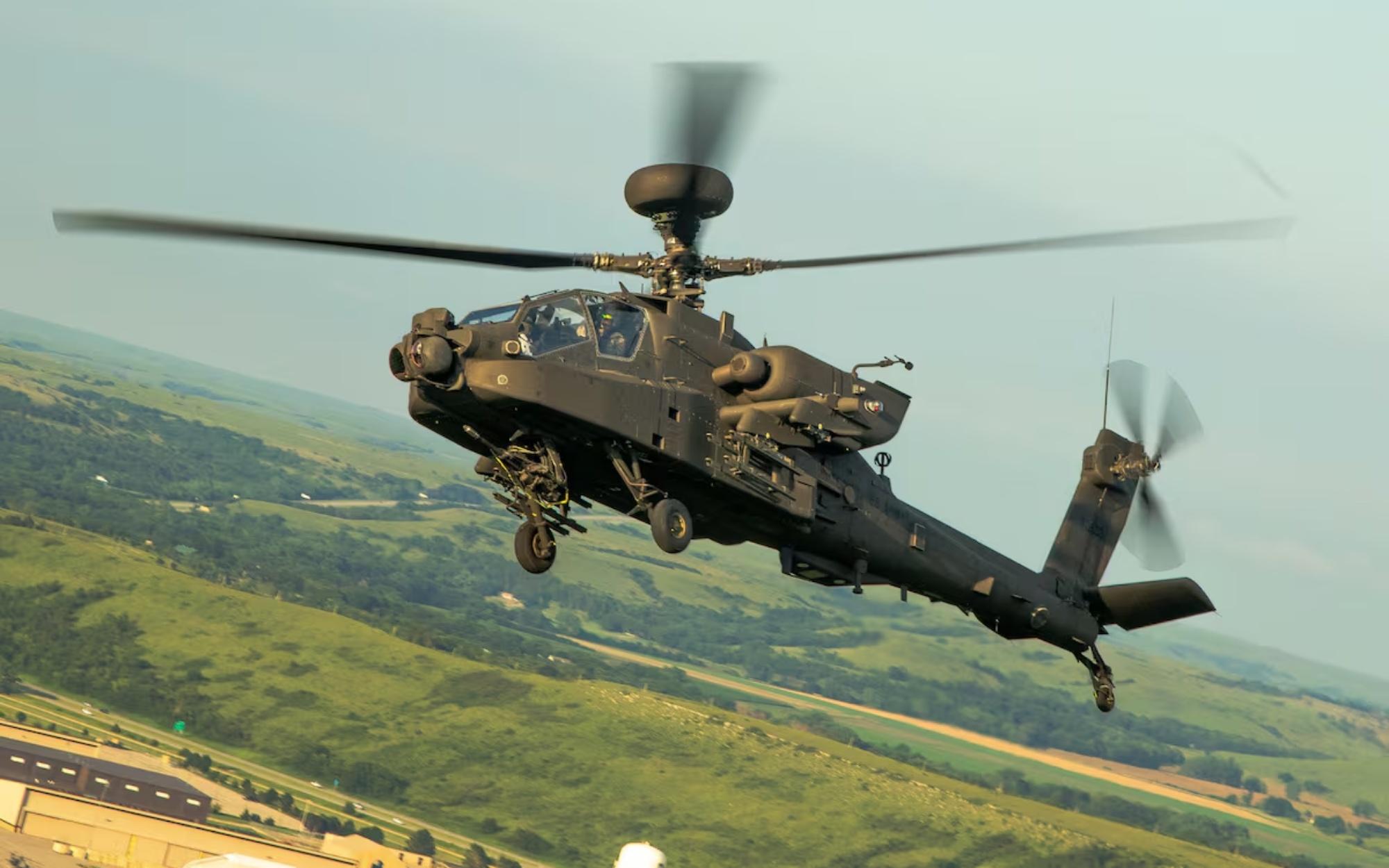
The Army has identified the two 1st Cavalry Division soldiers killed when an Apache attack helicopter crashed during a maintenance test flight in Central Texas. Chief Warrant Officer 2 Deontre T. Huey and Warrant Officer Seth L. Olmstead died at the scene Wednesday.
Both aviators were assigned to Bravo Company, 1st Battalion, 227th Aviation Regiment, 1st Air Cavalry Brigade, 1st Cavalry Division. Army officials publicly released their names Friday after the required family notifications had been completed.
Huey and Olmstead were flying an AH 64E Apache assigned to Fort Hood when the aircraft went down near Salado, Texas. The community is located about 30 miles southeast of the sprawling Army installation.
Officials said the soldiers were conducting a maintenance test flight when the crash occurred. Such flights are used to evaluate an aircraft after maintenance and ensure its systems are functioning properly before it returns to regular operations.
Emergency personnel responded to the crash site, but both soldiers were pronounced dead there, according to the Bell County Sheriff’s Office. The wreckage also sparked a major fire that complicated the emergency response and threatened the surrounding area.
Huey, 34, was from Killeen, Texas, the community immediately outside Fort Hood. He entered the Army in February 2014 as a motor transport operator and had served with the Fort Hood unit since February 2022.
Image Credit: DoW
A 1st Infantry Division AH-64E Apache helicopter flies to the Freedom Festival in Junction City, Kansas, on July 2, 2022. (Pfc. Dawson Smith /U.S. Army)
Olmstead, 25, was from Belton, Texas, another community near the installation. He joined the Army in January 2023 as a warrant officer candidate and had been assigned to the unit since October 2025.
Lt. Gen. Kevin D. Admiral, commanding general of Fort Hood and III Armored Corps, offered condolences to the families and fellow soldiers affected by the fatal crash. The loss has struck a formation with deep ties throughout Central Texas.
“Our hearts and deepest condolences are with the families of the Soldiers we lost Wednesday,” Admiral said. “The Army is a family, and a tragedy like this is felt throughout our formations and our community.”
Fort Hood officials said chaplains, support personnel, and other resources are being made available to soldiers following the deaths. The command is also focused on ensuring that the families receive assistance as they confront the painful days ahead.
“In the difficult days ahead, our priority is to ensure these families and our soldiers have the care and support they need,” Admiral said. “We are making all appropriate resources available to those affected by this loss.”
The crash ignited what the Bell County Sheriff’s Office described in a Facebook post as a “large fire that was burning out of control.” Flames spread across approximately 155 acres as crews worked to contain the blaze near homes and other structures.
Several nearby homes and buildings were threatened by the fire, officials said. One structure was lost, adding property destruction to an already devastating aviation accident, although authorities did not report additional deaths in the information released.
The Army has not publicly disclosed what caused the Apache to crash during the maintenance test flight. Determining whether mechanical failure, environmental conditions, human factors, or another issue played a role will require a careful examination of the aircraft and available flight information.
The tragedy comes amid a troubling series of military aviation accidents across multiple services. A B 52 Stratofortress recently crashed at Edwards Air Force Base in California, killing five airmen and three civilians.
Two Navy EA 18G Growler aircraft also collided in midair during a demonstration in Idaho. Other recent incidents include a Marine Corps F/A 18 Hornet crash during a training mission in Washington and an F 35B crash while landing in Southern California.
Each accident carries its own circumstances, and no evidence released so far connects them. Still, the losses reinforce the unforgiving risks military aviators accept during training, testing, demonstrations, and routine operations intended to keep America’s combat forces ready.
For the 1st Cavalry Division and the Fort Hood community, the focus now remains on Huey, Olmstead, and the loved ones they leave behind. Their names represent the human cost behind every military aviation loss and the dangers faced by those who climb into the cockpit.