America’s Contingency Corps Races to Counter the Battlefield Drone Threat
Posted By
Common Defense
On
In National Security, News |
No Comments
The character of warfare is changing as unmanned aircraft systems become increasingly common on battlefields around the world.
That expanding presence is forcing militaries to adapt with greater speed while confronting a threat that can no longer be treated as a distant concern.
America’s Contingency Corps is training against the drone threat as part of that necessary adaptation. The effort reflects a direct response to the growing use of unmanned aircraft systems and the demands they are placing on military forces.
The training is rooted in a clear battlefield reality presented by the source. Unmanned aircraft systems are appearing with greater frequency in conflicts around the world, creating pressure for militaries to adjust faster than ever.
For America’s Contingency Corps, preparation means training against the threat rather than waiting for warfare to stop changing. The focus recognizes that the expanding role of unmanned systems is already influencing how military forces prepare.
Image Credit: DoW
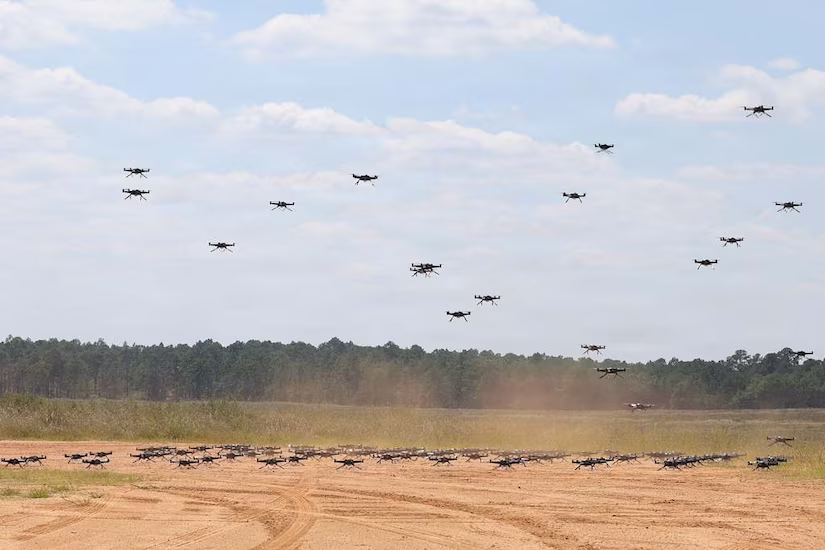
Small unmanned aircraft systems launch from Holland Drop Zone at Fort Bragg, N.C., during Exercise Scarlet Dragon 26-3, Sept. 16, 2026. The exercise tested the drones’ swarming capability in a simulated operational environment. Industry partners and soldiers assigned to the XVIII Airborne Corps evaluated the platform’s ability to operate in coordinated formation by launching dozens of aircraft simultaneously from a single site.
The source does not identify a location for the training or provide a detailed schedule.
It also does not name individual units, personnel, equipment, or specific unmanned aircraft systems involved in the effort.
Those omitted details do not change the central development. America’s Contingency Corps is training against a threat whose presence on battlefields worldwide continues to grow and whose expansion is driving rapid military adaptation.
The challenge described is broader than a single aircraft or event. It concerns the growing use of unmanned aircraft systems as a category and the pressure that growth is placing on militaries operating in a changing environment.
Image Credit: DoW
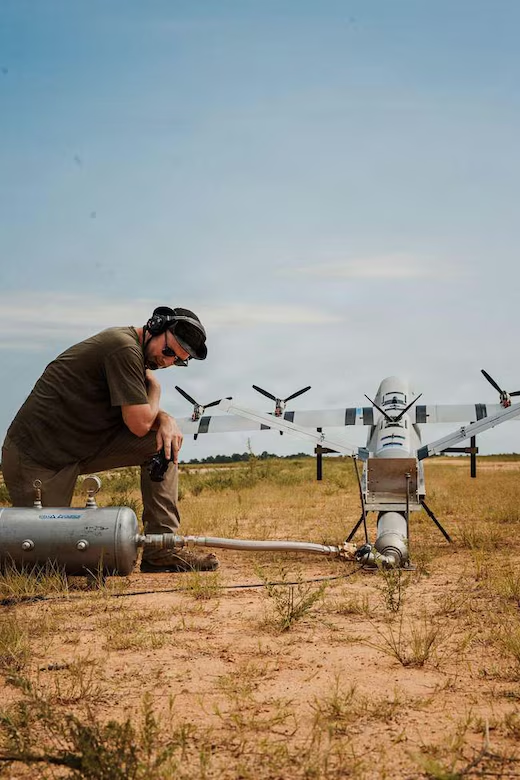
A project representative prepares an unmanned aircraft system for a demonstration during Exercise Scarlet Dragon 26-3 at Fort Bragg, N.C., Sept. 15, 2026. Soldiers assigned to the XVII Airborne Corps also evaluated new UAS platforms for offensive tactical operations in addition to the counter-UAS defense. Scarlet Dragon tests these emerging capabilities alongside soldiers and existing Army systems before they are fielded.
The account presents adaptation as necessary because the character of warfare itself is changing.
Militaries are not simply observing a new battlefield feature but responding to a trend that is forcing faster preparation.
America’s Contingency Corps is therefore confronting the issue through training. That approach keeps the focus on readiness while the use of unmanned aircraft systems continues to expand across battlefields around the world.
The source does not describe specific training scenarios or explain how the drone threat is simulated.
It provides no results, evaluations, timelines, or measurements that would allow a more detailed assessment of the training.
Image Credit: DoW
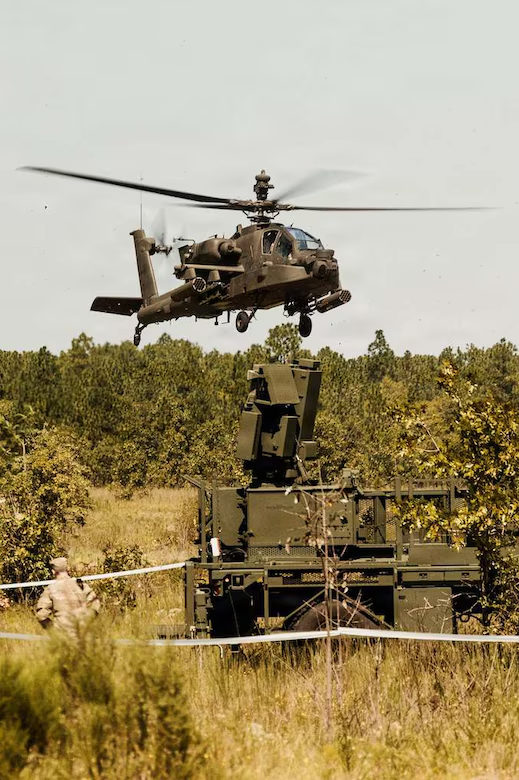
An AH-64 Apache helicopter flies above a Sentinel radar during Exercise Scarlet Dragon 26-3 at Fort Bragg, N.C., Sept. 15, 2026. Apaches assigned to the 82nd Airborne Division Combat Aviation Brigade flew high-speed, low profiles while Sentinel radars fed tracks into a shared air picture. Scarlet Dragon tested how legacy Army systems and autonomous technology worked together against modern aerial threats.
What is clear is the direction of the preparation. The Contingency Corps is training against unmanned aircraft threats during a period when militaries face increasing pressure to keep pace with changes in warfare.
The Department of War’s stated responsibility provides the institutional frame for that preparation. The department provides the military forces needed to deter war and ensure the security of the nation.
Training against emerging and growing battlefield threats fits within the readiness focus presented in the source.
The Department of War must provide military forces while the conditions those forces may encounter continue to change.
The source also connects military readiness with the broader requirement to deter war. Preparing forces against drone threats is presented alongside the department’s responsibility to supply the military power necessary for deterrence and national security.
Image Credit: DoW
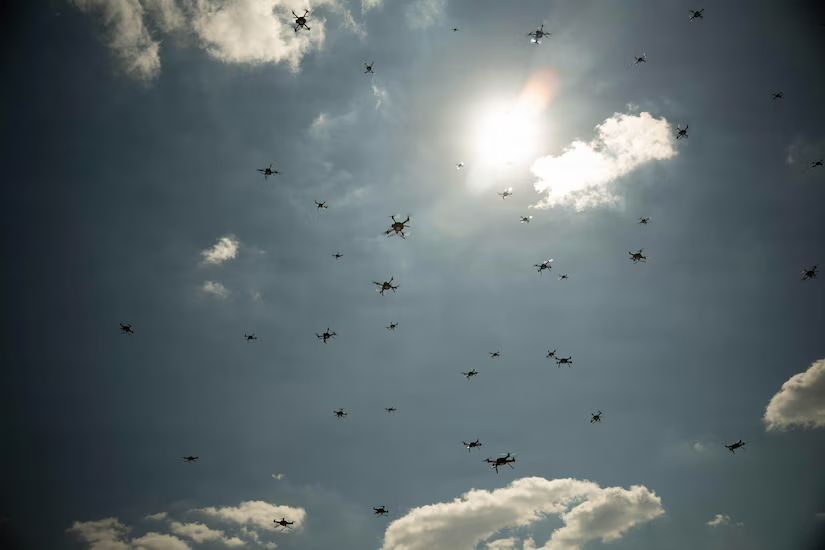
A drone swarm launches during Exercise Scarlet Dragon 26-3 at Fort Bragg, N.C., Sept. 16, 2026. During the operational stress test, large drone swarms were combined with other threat profiles to pressure the network across multiple echelons. Scarlet Dragon used those layered aerial attacks to validate sensor, command and control and air defense integration under realistic conditions.
No claims are provided about the success of the training, and no operational outcome is described.
The available information establishes only that the training is occurring against a growing threat created by the widening battlefield use of unmanned aircraft systems.
The main message is straightforward and urgent. Warfare is changing, drone use is growing, and America’s Contingency Corps is training against that threat while the Department of War continues its mission of providing forces for deterrence and national security.