The U.S. Army has awarded Lockheed Martin a $1.2 billion contract covering its short range ballistic missiles.
The award moves the Precision Strike Missile Increment 2 program toward initial production while also providing a path for future Army orders.
Lockheed Martin said the agreement is an indefinite delivery, indefinite quantity contract.
It covers initial production and additional orders for Increment 2 of the Precision Strike Missile, commonly identified as PrSM.
“This award marks an important step in delivering PrSM Increment 2 to the warfighter,” Dave Griser, Lockheed Martin vice president for precision fires, said in the company announcement.
Griser said Lockheed Martin is prepared to move the missile program beyond its current testing work.
“We’re ready to move from flight testing into production and provide the Army with an expanded long-range precision fires capability.”
PrSM is intended to replace the Army Tactical Missile System, which was first fielded in the early 1990s.
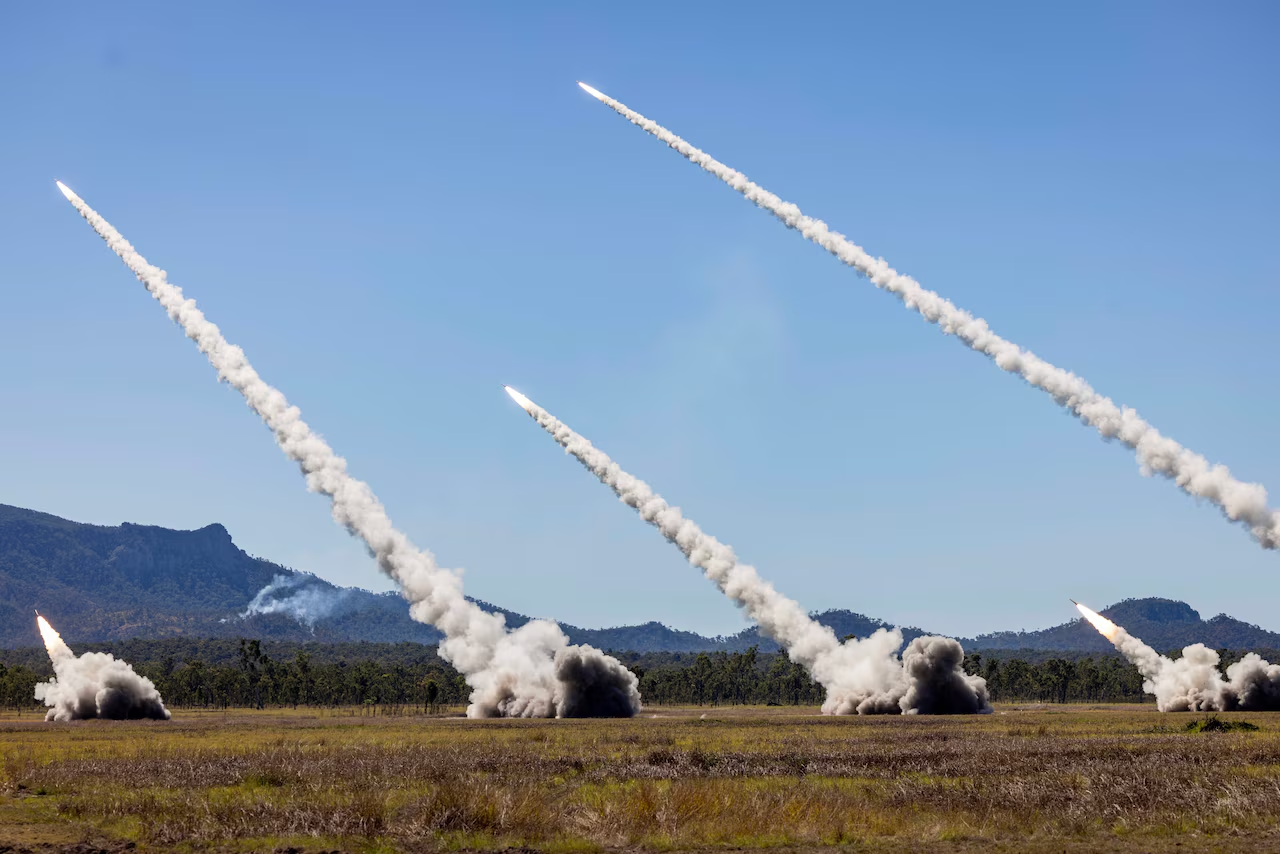
The newer missile has a range of about 500 kilometers, compared with about 300 kilometers for the Army Tactical Missile System, also known as ATACMS.
The missile can be fired from two launch systems already identified by the Army program.
Those platforms are the M142 High Mobility Artillery Rocket System and the M270 Multiple Launch Rocket System.
Increment 2 brings a multimode seeker designed to lock on to moving targets on land.
That seeker also allows the missile to strike ships moving at sea, giving launchers based on land a maritime strike capability.
Lockheed Martin is currently conducting flight testing of the new PrSM version.
That work is expected to continue, with more Increment 2 flight tests scheduled for 2027.
The company said Increment 2 has already completed two flight tests during the year.
The first took place in March, while the second was conducted in August.
“PrSM Increment 2 completed its first flight test in March and its second flight test in August — obtaining critical data during flight, launching from a HIMARS, deploying protective covers and engaging the target,” the manufacturer said.
The contract arrives after PrSM recently made what the source described as its controversial combat debut during the Iran war.
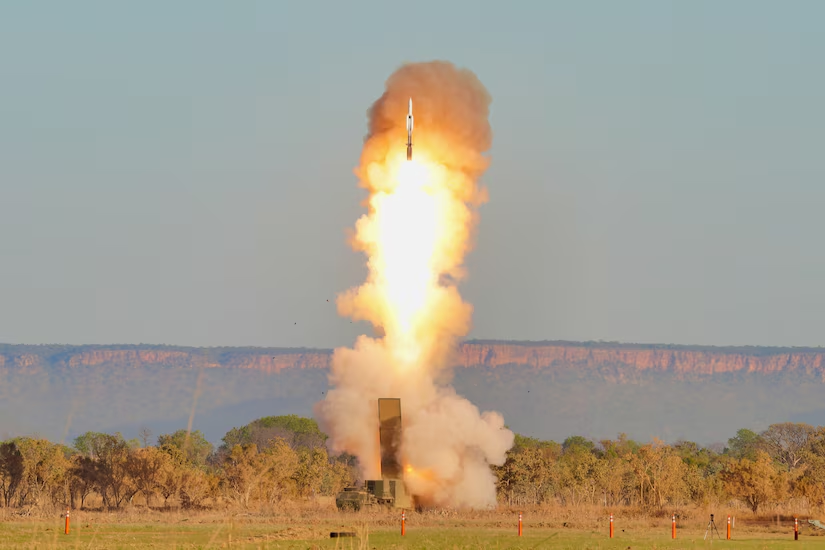
Analysts believe a PrSM missile killed dozens of civilians in the Iranian city of Lamerd on Feb. 28, the first day of strikes by the United States and Israel against Iran.
According to those analysts, the missile involved sprays a cloud of pellets. U.S. Central Command has denied the accusation concerning the civilian deaths in Lamerd.
The U.S. military now faces what the source described as a desperate shortage of strike and air defense missiles after expending vast numbers during operations involving Iran. The reported shortage includes a lack of PrSM weapons.
Against that backdrop, the Army’s $1.2 billion award covers both initial production and the mechanism for future orders.
Lockheed Martin also connected the contract to the Department of War’s broader investment in ballistic missiles.
The manufacturer said it is working to increase production capacity while development continues on other versions of the weapon.
“Lockheed Martin is expanding capacity to quadruple PrSM production while continuing to develop additional PrSM increments,” the company said.
The production expansion, continued flight testing and planned 2027 tests place Increment 2 at the center of Lockheed Martin’s current PrSM work.
For the Army, the contract advances a missile that offers greater range than ATACMS and can engage moving targets both on land and at sea.