Army’s Top Drill Sergeant Shatters the Screaming Stereotype: Empathy Matters
Posted By
Common Defense
On
In National Security, News |
No Comments
Sgt. 1st Class Kevin Harrington does not sound like the worn voiced caricature of an Army drill sergeant.
Even while discussing drill sergeant duty, he speaks clearly and evenly, without the strained tone that can follow countless shouted corrections.
Harrington credits good vocal technique, along with an occasional cup of tea, for helping preserve his voice.
He said drill sergeants must project from the diaphragm rather than simply shouting from the throat.
“Tea with some honey sometimes,” he said. “And you have to not yell from your throat. You have to use that diaphragm if you need to be loud.”
He also admits that nature gave him an advantage. Harrington describes himself as naturally loud, a useful quality when he must make sure as many as 240 people can hear him during summer surges.
“I think I’m just naturally born loud,” Harrington said. “I have a louder voice. My wife swears I don’t listen when I talk, so I’m kind of a natural.
When you have to make sure 240 individuals can hear you, because we get that many during our summer surges, we have to be loud to be heard, right?”
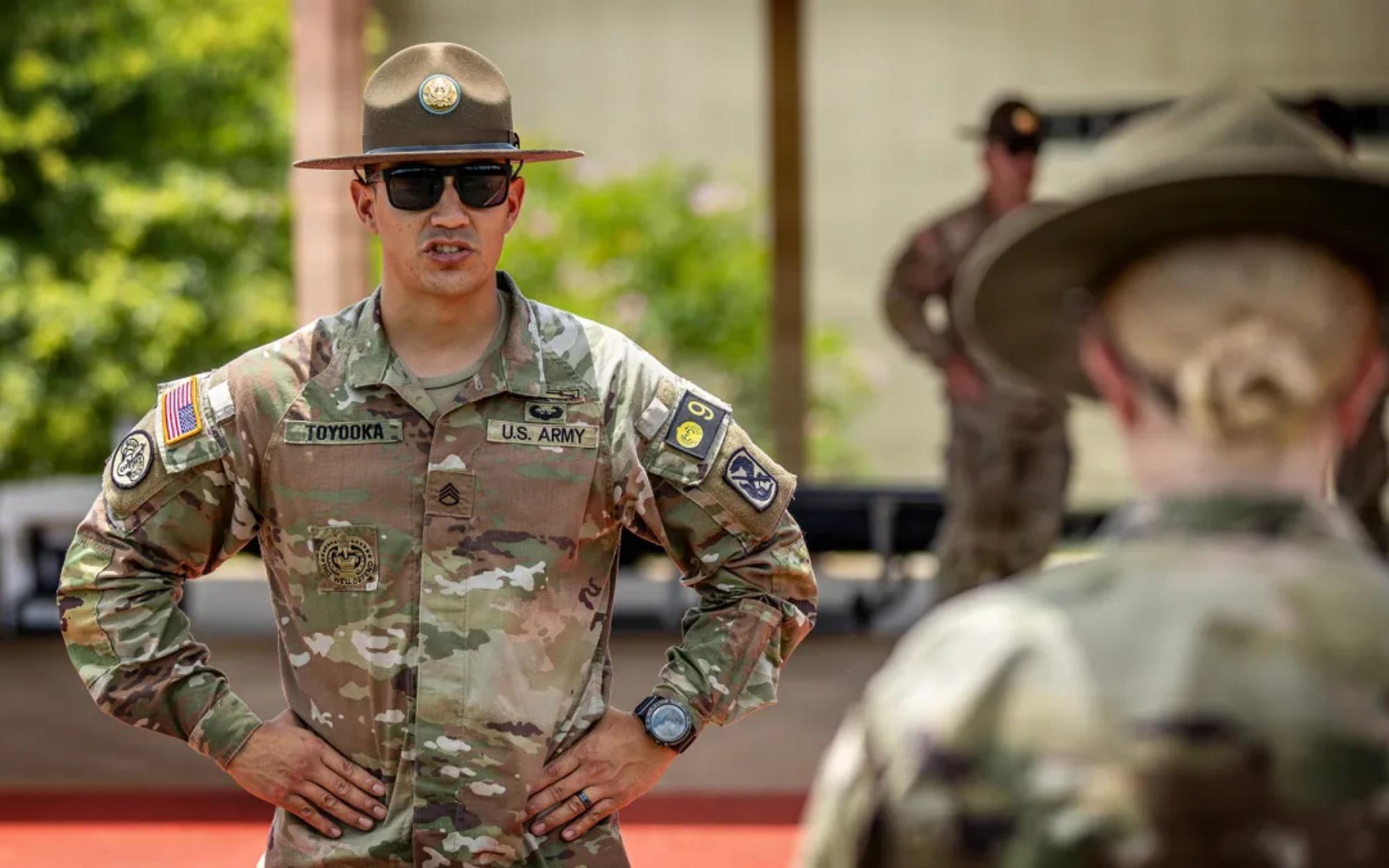
Harrington is the 2026 Army Reserve Drill Sergeant of the Year, but his approach stretches beyond the familiar image of a campaign hat wearing disciplinarian.
He views drill sergeants as coaches, mentors, fathers and chaplains who must understand the recruits under their charge.
“You think of a ‘drill sergeant,’ you think of yelling, and this authoritative figure that’s always screaming,” Harrington said.
“But we’re so much more than that, right? We are coaches, mentors. We’re fathers. We’re chaplains. We have to operate with empathy.”
Image Credit: DoW
Any sergeants currently serving as drill sergeants who meet all the requirements for promotion will also pick up staff sergeant, with an effective date of Sept. 10, 2026. Army photo by Daniel Marble.
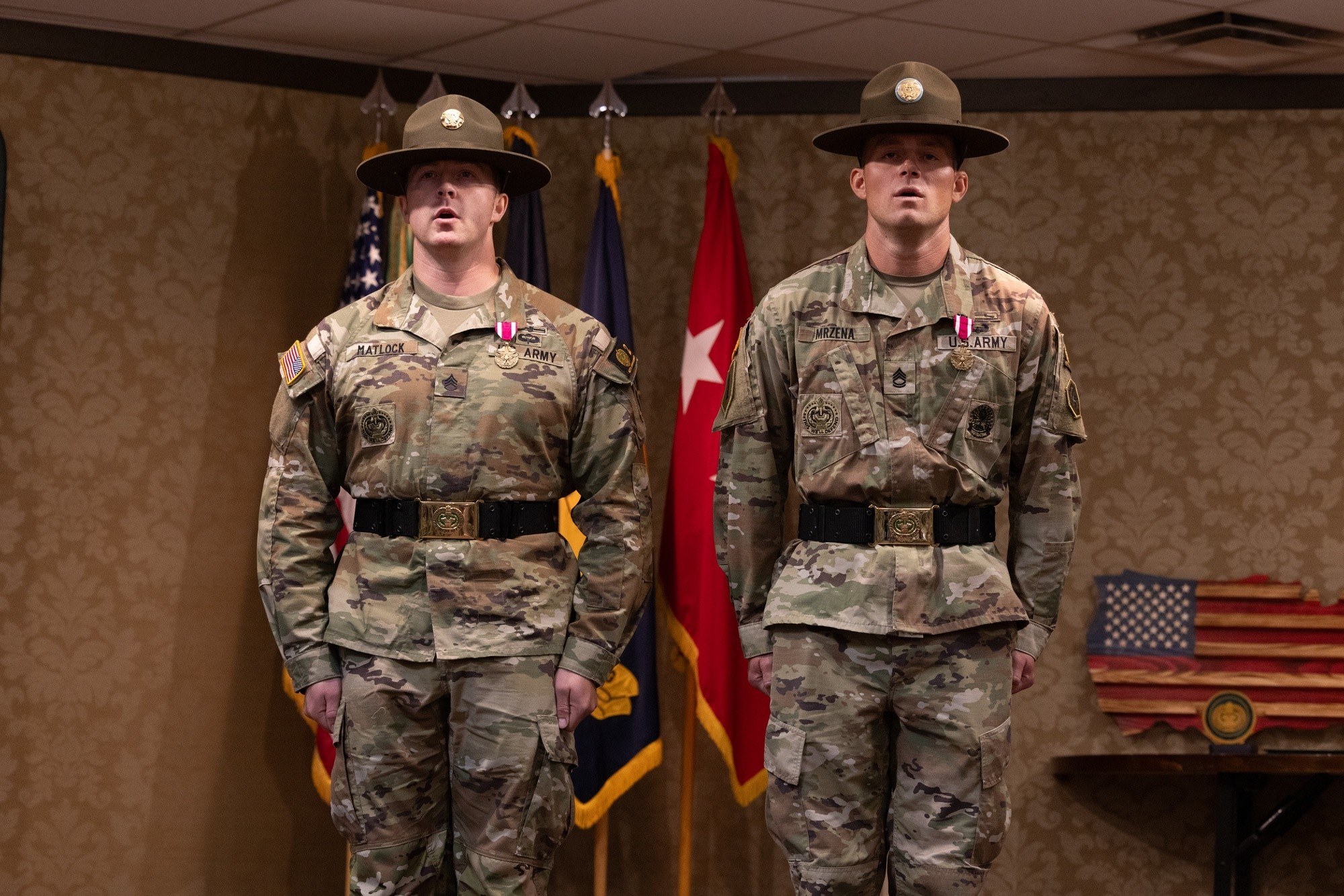
Harrington and Staff Sgt. Noel Berges defeated 12 other finalists from Army training bases across the country.
The three day competition took place at Fort Jackson, South Carolina, with Harrington winning the reserve category and Berges finishing first among active Army entrants.
The drill sergeants faced 34 events, including an Army fitness test, weapons handling and 14 graded lanes focused on drill sergeant skills.
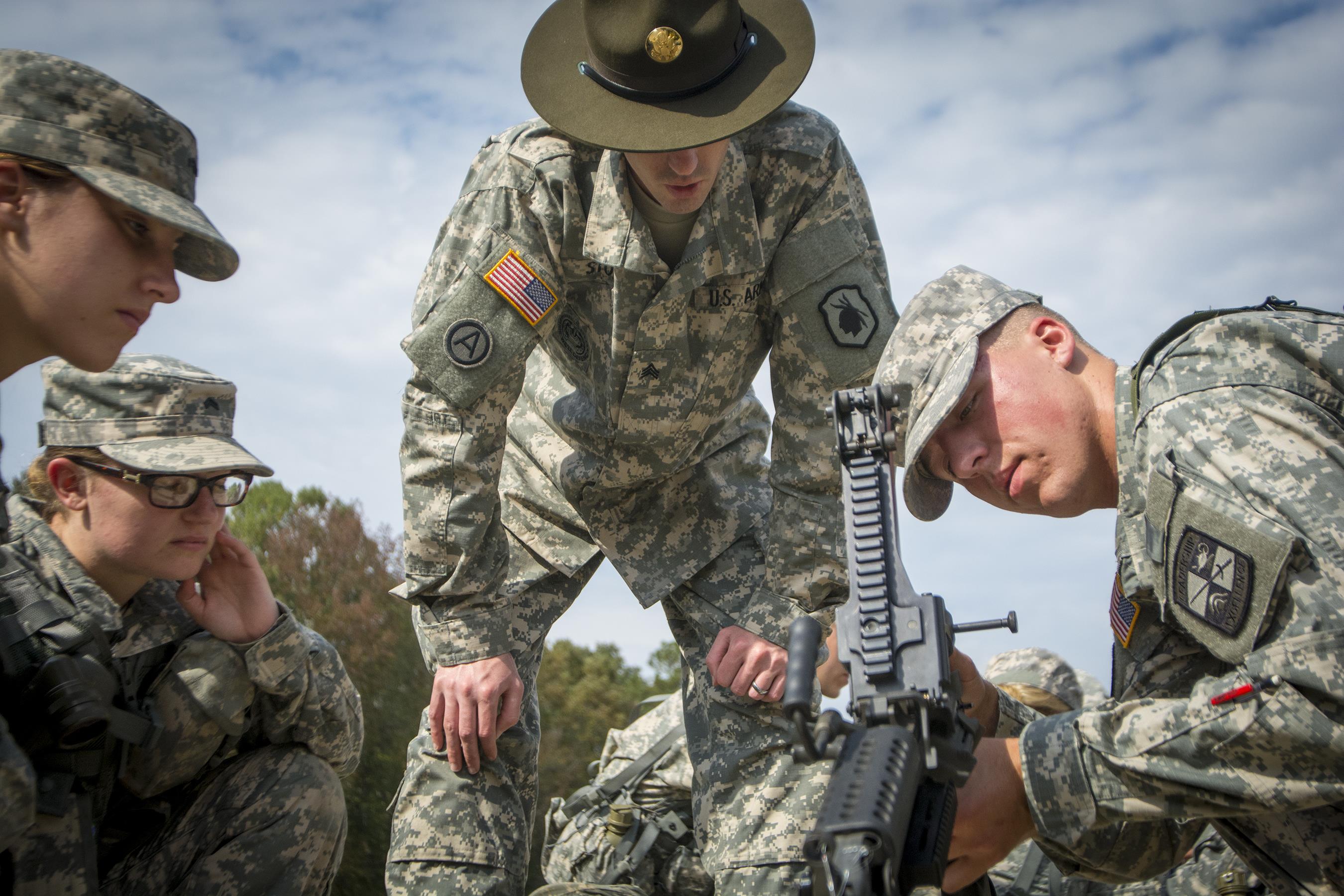
They taught actual basic trainees how to move tactically as a squad, perform drill and ceremonies, and handle and fire an M4 for basic Army marksmanship qualification.
Harrington especially enjoyed the marksmanship portion and the chance to help inexperienced recruits improve.
He said he values coaching someone who begins without knowing what to do and ultimately qualifies with a weapon.
Competitors also appeared before a board and briefed Army leaders about possible improvements to drill sergeant training.
Image Credit: DoW
The contest did not award points for tossed bunks or overturned foot lockers, despite the chaotic scenes that soldiers from many eras may remember.
“This competition was more mentally driven than it was physical,” Harrington said.
“We’re doing teaching, teaching battle drills, teaching rifle marksmanship. We had a lane where we had to coach an individual through that with handling weapon systems and going over different firing positions.”
Debates about whether basic training has lost rigor remain common among veterans.
The subject received renewed attention after Secretary of War Pete Hegseth promised to revamp basic training with drill sergeants who instill fear, curse and put their hands on recruits.
Harrington avoided directly commenting on those policies, but he expressed confidence in current training standards.
Image Credit: DoW
He said basic combat training remains challenging and gives recruits what they need to become soldiers.
“Basic combat training is supposed to be challenging,” Harrington said.
“We’re not doing anything that is outside of what we’re supposed to be doing as drill sergeants. We’re just making the next warfighter. Between corrective action and corrective training, teaching, mentoring, coaching an individual up, they’re civilians coming off of the couch, the sons and daughters of our citizens, and we have to make them into a soldier.”
For Harrington, the value of a drill sergeant rests in teaching recruits and understanding how to keep them moving forward, not in harassment or hazing.
Recruits may be separated from their families or arrive from difficult situations, making empathy and support part of the job.
“You know life happens and these individuals go through, you know, tough times, leaving their families, coming from hard situations, and everything like that,” he said.
“And you have to be empathetic and support them and coach them through that, and get them to cross the finish line.”
Harrington said his own experience in basic training inspired him to volunteer for drill sergeant duty. His respect and admiration for his drill sergeant convinced him that serving on the trail was something he wanted to do himself.