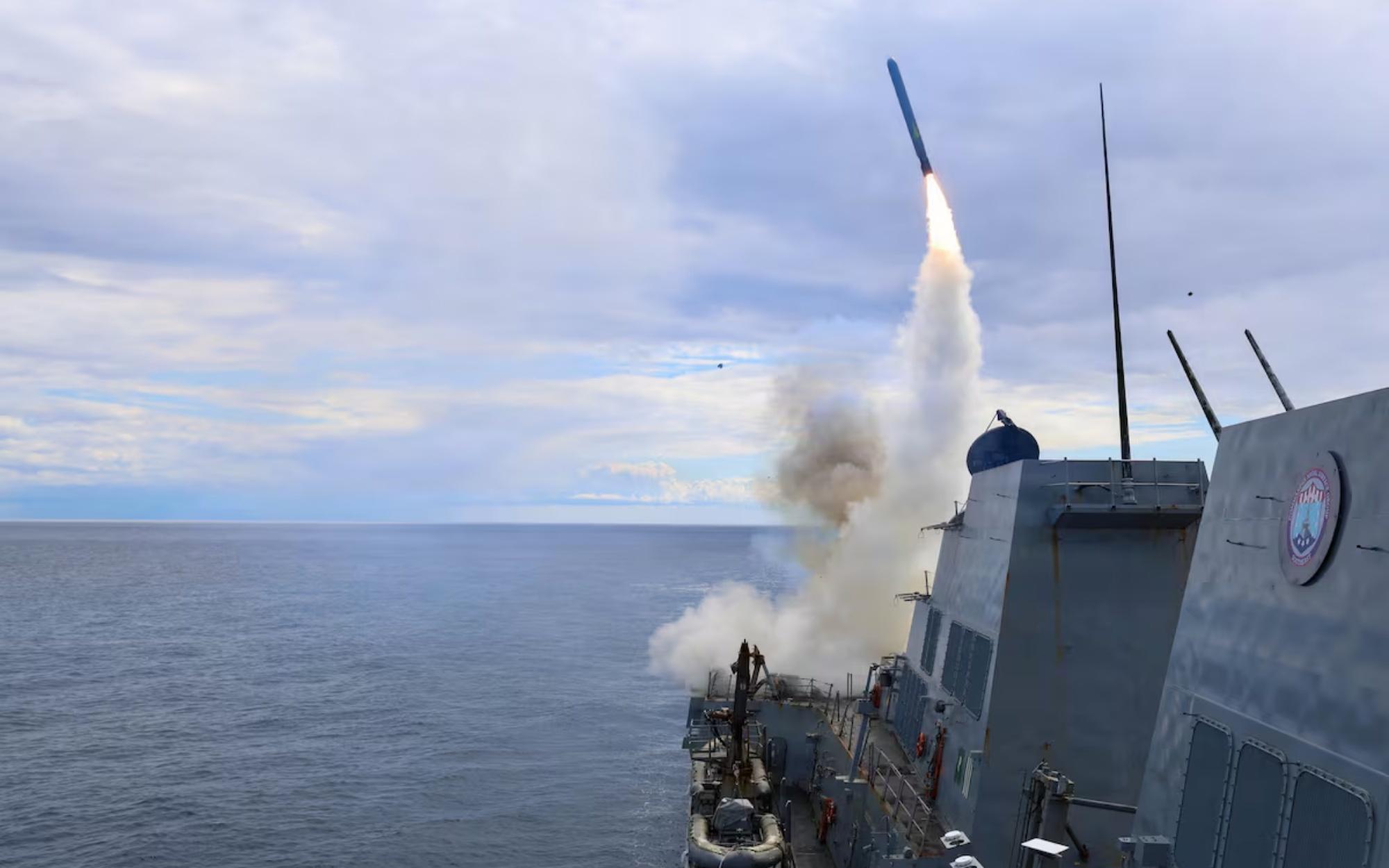
The War Department has awarded Raytheon a multiyear contract worth up to $20.7 billion for Advanced Medium-Range Air-to-Air Missiles, known as AMRAAMs. The Pentagon said the agreement will nearly double production of the widely deployed weapon.
The five year contract includes two option years and falls under the Pentagon’s Arsenal of Freedom campaign to strengthen weapons production. The department awarded the contract Sept. 25 and announced it Monday with RTX, the parent company of Raytheon.
The department described the agreement as a joint purchase involving the Air Force, Navy and allies. That broad customer base places American military services and allied nations under the same major production effort.
“We are working across the defense industry to ramp production and build the Arsenal of Freedom,” Michael Duffey, the under secretary of war for acquisition and sustainment, said in a statement. “This award strengthens our ability to equip the Joint Force and our allies with a proven air-to-air capability, ensuring our warfighters maintain a decisive advantage.”
The contract’s $20.7 billion ceiling towers over the Pentagon’s previous record AMRAAM award. That earlier agreement, issued in July 2025, was worth $3.5 billion and covered missiles for the Air Force, Navy and allies in Europe, Asia and the Middle East.
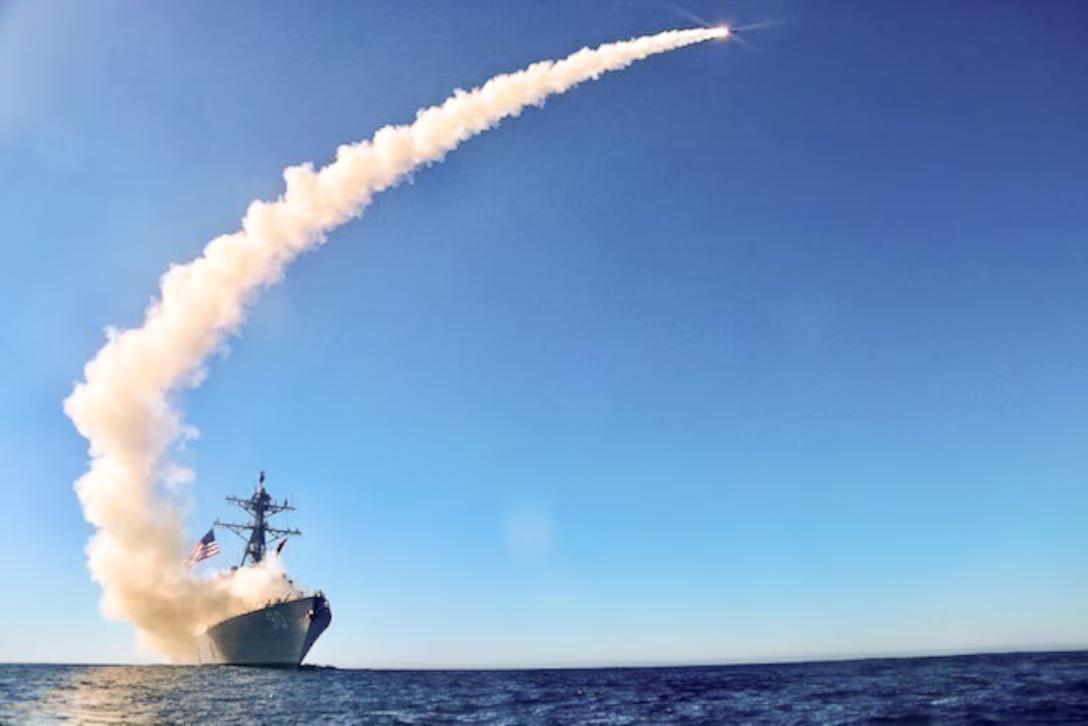
The War Department thanked Congress for granting multiyear procurement authority. That authority allows the Pentagon to commit to purchasing missiles across several years rather than buying them individually, and the department wants lawmakers to provide additional authority and funding to sustain production.
Congress has not yet funded the entire agreement, according to Reuters, which described the award as provisional. Industry executives have warned that contractors could delay major investments in factories and parts until lawmakers provide the necessary funding, Reuters reported.
The award arrives as the Pentagon works to restore munitions stockpiles drawn down by the war with Iran. The planned production increase is part of that effort to replenish supplies while meeting continuing military and allied requirements.
The contract also follows five framework agreements that Raytheon signed with the department in February. Those agreements established long term production targets before formal contracts were completed, setting the stage for larger output commitments.
Under the February agreements, RTX committed to producing more than 1,000 Tomahawks annually. The company also committed to annual output of at least 1,900 AMRAAMs and more than 500 Standard Missile-6 interceptors.
Neither the Pentagon nor RTX disclosed how many missiles would be purchased through the new contract. They also did not specify an annual production rate associated with the agreement, leaving the precise delivery totals and yearly pace unstated.