Luke Evans is challenging the assumption that being gay automatically places someone inside a particular political or cultural camp.
The Beauty and the Beast actor argued that sexuality represents only one part of a person and does not dictate every belief that person holds.
Fox News reported that Evans addressed the subject during an interview with The Telegraph. The discussion centered on the politics surrounding his upcoming ITV drama, The Party, and whether gay people are still expected to identify with left leaning politics.
Evans offered a direct response to that expectation. Rather than treating gay people as a unified political group, he emphasized the variety of opinions that exists among people who share the same sexuality.
“Just because you are gay yourself doesn’t mean you have to be woke,” Evans told The Telegraph.
His answer cut directly against the idea that sexuality comes with a predetermined collection of political positions.
Evans continued: “Your sexuality is one part of who you are, but our opinions on society and life differ in every single person.
I’ve got very woke gay friends and very unwoke gay friends. We don’t all agree on the same thing.”
His comments were not presented as an attack on people who consider themselves progressive. Instead, Evans rejected the expectation that people who share a sexuality must automatically agree about politics, society or culture.
His acting career has also helped shape that perspective. Evans has spent much of his career portraying characters whose sexuality differs from his own, an experience he cited while discussing identity and professional talent.
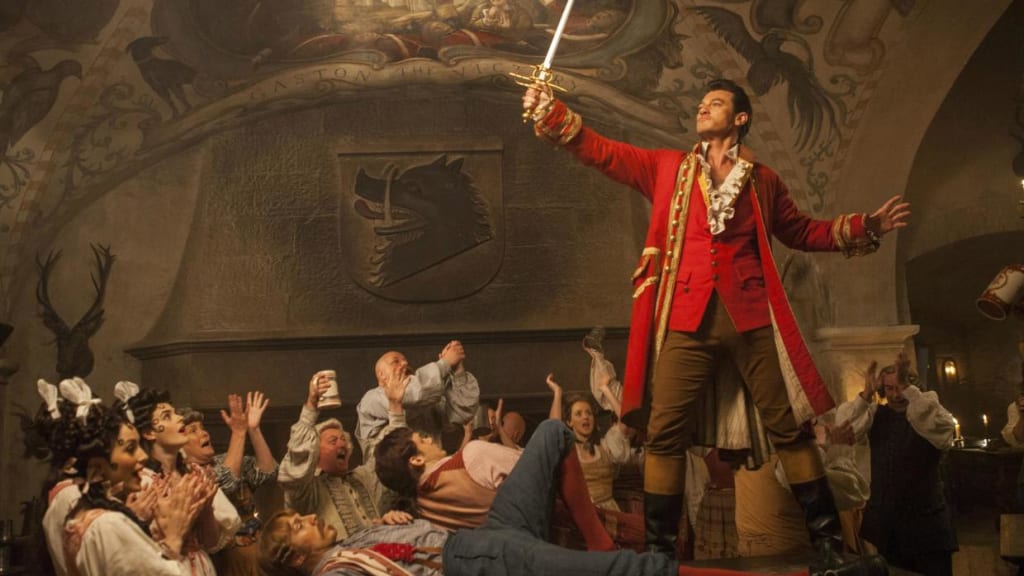
“I’ve played mostly straight macho roles my whole career, and I’ve loved it,” Evans said.
He added that his career had shown that “who you are and who you love has absolutely no relevance to your talent.”
Evans also dismissed the argument that gay actors should be restricted to playing gay characters.
He pointed to the effect such a limitation would have had on his own career.
“If gay people only played gay characters, then I’d have had no career,” he said.
The remark connected his broader argument about political assumptions to expectations within acting and casting.
Evans is not the only public figure to discuss political expectations tied to sexuality. In 2024, influencer Amir Odom told Fox News Digital that he once believed being Black and gay came with what he called a political “script.”
“That, because I’m gay, I have to be [a] Democrat, I have to support all the LGBTQ causes because that’s who was there for me,” Odom said.
He then described the moment his thinking changed: “Until I realized that wasn’t the truth.”
Actor and activist Yuval David described another version of that experience in 2025. David, who described himself as gay, progressive, American and Israeli, told Fox News Digital that he had become “politically homeless” after growing disconnected from communities he once expected to represent him.
David later voted for Donald Trump in the 2024 presidential election. His account focused on a sense of exclusion from political and social communities with which he had previously expected to identify.
“Nobody forced me to be politically homeless,” David said. “It was a place that I found myself because I didn’t feel included and I didn’t feel represented in the communities that I thought were supposed to represent me.”
Billy Porter has also recently discussed the relationship among sexuality, race and changing attitudes within Hollywood, although he approached the issue from a different direction.
Earlier this year, Porter said his career benefited during a period he now describes as “performative wokeness.”
“As a Black, gay, out artist, I caught the wave of what we now know as performative wokeness,” Porter said.
His assessment focused on the role that changing cultural attitudes played in his own career.
Evans’ central point remains straightforward: people can share the same sexuality without sharing the same worldview.
In a celebrity culture that frequently treats identity and politics as inseparable, he is pushing back against the expectation that one must automatically determine the other.
WATCH BELOW: