America’s Iran War Timeline Reveals a Conflict That Never Truly Stopped
Posted By
Common Defense
On
In National Security, News |
No Comments
The war between the United States and Iran has shifted repeatedly between open combat and temporary lulls since it began on Feb. 28, 2026. The fighting has never fully stopped, leaving at least 19 American service members dead and more than 830 wounded in action.
The conflict has been tracked through War Department releases, press conferences, interviews, media queries, internal reporting and other news reports. The timeline remains an ongoing project as additional information emerges.
Operation Epic Fury opened with attacks on Iranian command systems and air defenses. Israel simultaneously began Operation Roaring Lion, Iranian Supreme Leader Ayatollah Ali Khamenei was killed, and an American strike on the Minab school killed at least 175 people, many of them students.
Iran responded by attacking American bases across the Middle East. Six Army Reserve soldiers were eventually identified as killed at Port Shuaiba, Kuwait, while three American F-15s were shot down by Kuwait in a friendly fire incident.
The submarine USS Charlotte reportedly sank the Iranian frigate IRIS Dena near Sri Lankan waters, killing 104 crew members and rescuing 32. An Iranian drone also struck the U.S. embassy in Kuwait, forcing it to close.
A soldier later died from wounds suffered during an Iranian attack on Prince Sultan Air Base in Saudi Arabia. Separately, six airmen died in a KC-135 crash in western Iraq.
A fire aboard the USS Gerald R. Ford burned for hours, with more than 200 sailors treated for smoke inhalation and one medically evacuated. The carrier later sailed to Crete, Greece, for repairs after thousands were reported to be without beds.
Image Credit: DoW
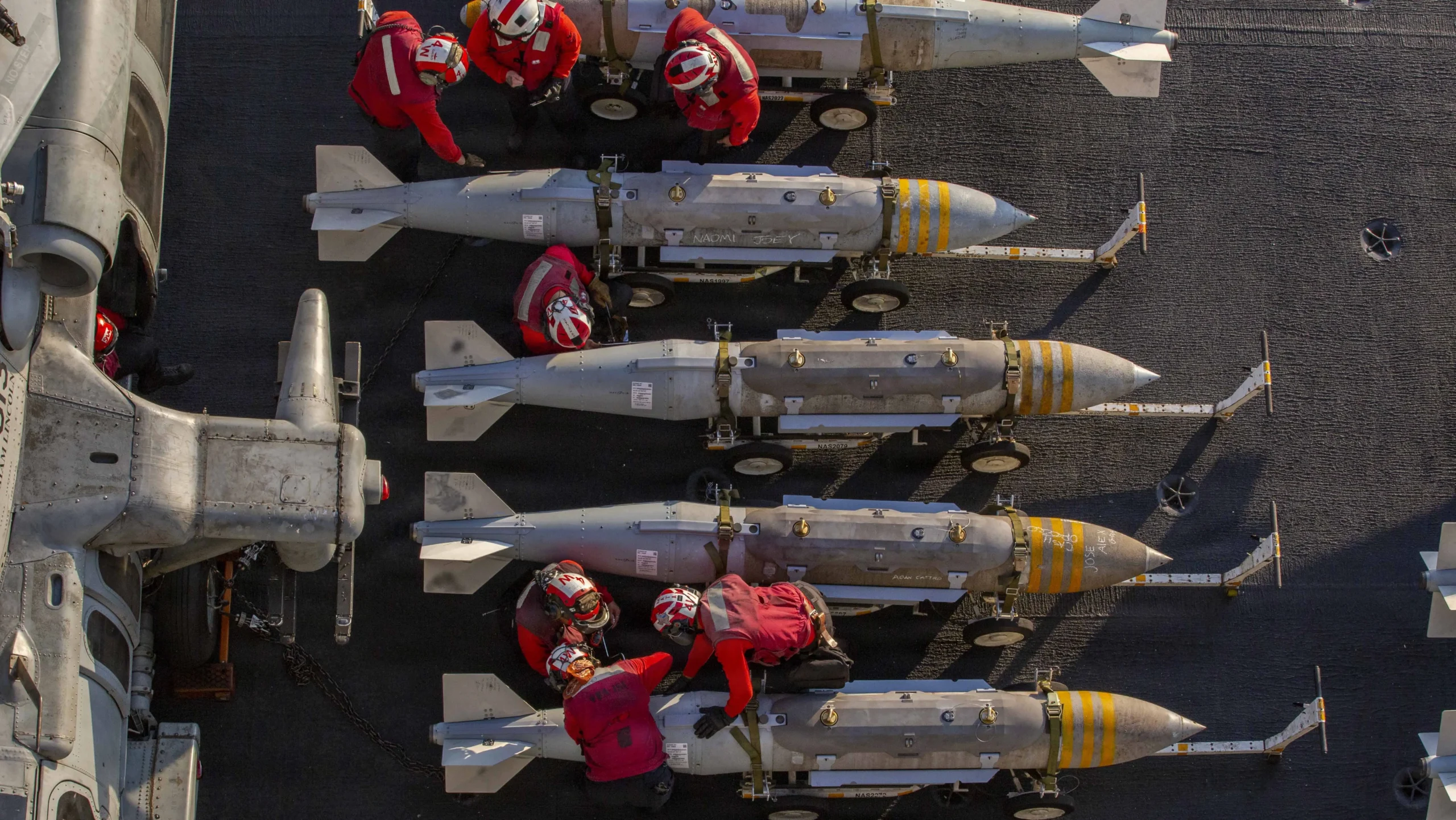
Sailors prepare to stage ordnance on the flight deck of Nimitz-class aircraft carrier USS Abraham Lincoln in support of Operation Epic Fury, Feb. 28, 2026. Navy photo.
An Israeli airstrike killed Ali Larijani, head of the Iranian Supreme National Security Council. Iranian air defense also hit an American F-35, wounding its pilot, who completed an emergency landing.
An Iranian missile and drone attack destroyed an E-3 AWACS aircraft at Prince Sultan Air Base. An F-15E was also shot down in Iran, triggering rescue operations that recovered the pilot quickly and the weapons system officer nearly two days later.
President Donald Trump set an April 7 deadline and threatened to destroy Iran “in one night.” He later announced a ceasefire, although the conflict continued through blockades, strikes and retaliatory attacks.
Image Credit: DoW
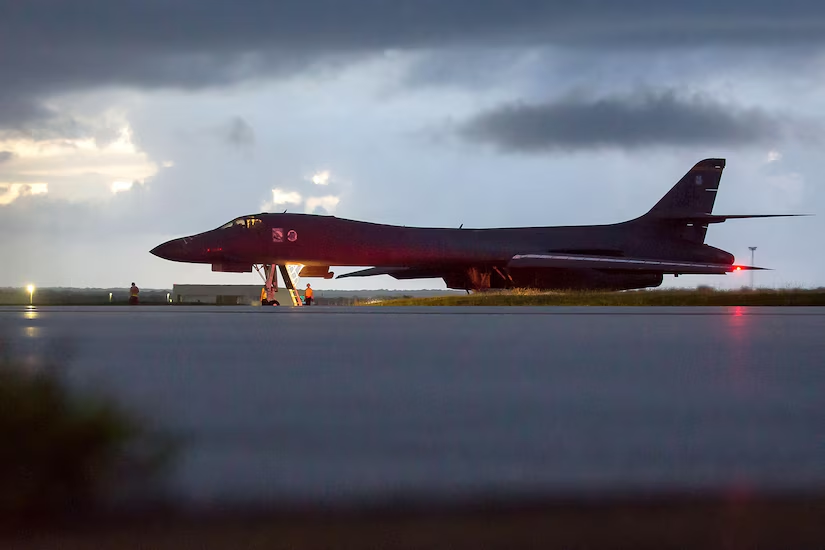
A B-1B returns from a mission in support of Operation Epic Fury, March 4, 2026. (U.S. Air Force)
CENTCOM said a blockade of Iranian ports that began April 13 ultimately redirected 140 vessels, disabled nine and allowed more than 50 carrying humanitarian aid to pass. President Trump canceled Project Freedom the day after its launch, although Secretary of War Pete Hegseth later said it “went underground.”
Hegseth testified that the shipping effort helped 900 ships and between 400 million and 500 million barrels of oil transit the Strait of Hormuz through June. The United States later ended the blockade before restarting it amid renewed fighting.
An MH-60S Sea Hawk crashed in the Arabian Sea, killing Navy Cmdr. Gabriel Edwards after three sailors were recovered. CENTCOM later announced strikes against 90 Iranian military targets, while Trump declared the April 7 ceasefire “over.”
Image Credit: DoW
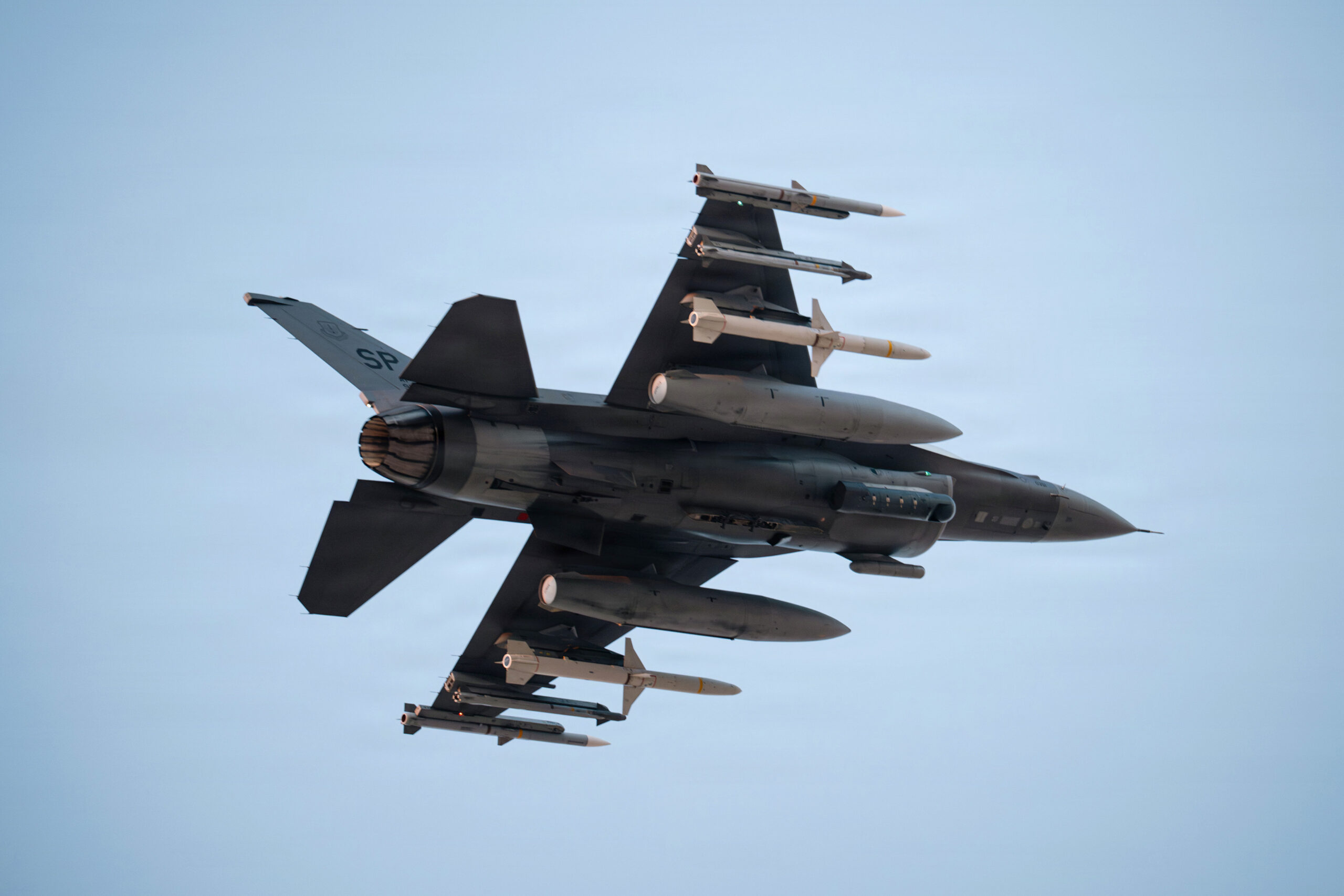
A U.S. Air Force F-15E takes flight in the Middle East in support of Operation Epic Fury, March 2, 2026. (U.S. Air Force Photo)
CENTCOM conducted 13 consecutive nights of bombing beginning with 140 targets on July 11 and continuing through July 23. Iranian attacks in Jordan killed three soldiers, while another soldier died in Iraq during the controlled detonation of a downed drone.
The Pentagon’s official wounded count rose above 600 and later above 750, including 341 troops injured since early July. Cyber attacks also targeted water and wastewater infrastructure, with officials reportedly suspecting hackers based in Iran were responsible for attacks affecting at least 12 states.
Image Credit: DoW
Air Force Gen. Dan Caine, chairman of the Joint Chiefs of Staff, speaks during a press briefing about Operation Epic Fury at the Pentagon, March 4, 2026.
Families aboard the USS Abraham Lincoln reported food shortages, moldy showers and poor morale. Acting Navy Secretary Hung Cao acknowledged that sailors were treated for mental health issues, while the Navy ordered the USS George Washington to replace the Lincoln.
Later exchanges included American attacks on Iranian tankers and Iranian missiles aimed at American bases and ships. Eight F-15 fighter jets were damaged, an A-10 Thunderbolt II was heavily damaged, and a reported American airstrike on a wedding party killed five, although the United States denied targeting civilians.
The Pentagon inspector general reported that the American mission statement remained classified. The Congressional Budget Office found that the military probably used between one half and two thirds of the American stockpile of missile defense interceptors.
Image Credit: DoW
A U.S. Air Force B-52 Stratofortress aircraft refuels from a KC-135 Stratotanker aircraft over the U.S. Central Command area of responsibility, during Operation Epic Fury, March 26, 2026. (U.S. Air Force photo)
Recent disclosures included 38 sailors and Marines injured during overseas Iran operations and eight sailors who attempted suicide while supporting the war. The USS Theodore Roosevelt also departed for an anticipated extended deployment, becoming the fifth Navy aircraft carrier assigned to Iran war operations.