Boeing Caps Blockbuster Week with First Full Rate Grey Wolf Order
Posted By
Common Defense
On
In National Security, News |
No Comments
Boeing added another major award to a packed week after the U.S. Air Force ordered four additional MH-139A Grey Wolf helicopters. The roughly $85 million contract marks the first Grey Wolf order under full rate production and includes some sustainment work.
The announcement came Thursday, only weeks after the Air Force declared the helicopter ready for its nuclear missile security mission. Boeing expects to deliver the four aircraft in 2028 or 2029.
A Boeing spokesperson told Defense News that the Grey Wolf contract was awarded Sept. 25. The new purchase brings the total number of helicopters under contract to 42, with 27 already delivered.
Six of the earlier aircraft were test helicopters. The remaining helicopters came from production lots ordered before the first full rate lot, making this contract a notable step for the program after years of delays and shifting purchase plans.
“This milestone validates key readiness levels for Grey Wolf and supports the service’s fielding plans to secure vital national assets across the country’s strategic missile fields,” Kathleen Jolivette, vice president and general manager of Vertical Lift Programs at Boeing Defense, Space & Security, said in the company release.
The Grey Wolf award capped an unusually busy stretch for Boeing. On Tuesday, the U.S. Navy selected the company to build its F/A-XX sixth generation carrier based fighter through a development contract worth more than $20 billion.
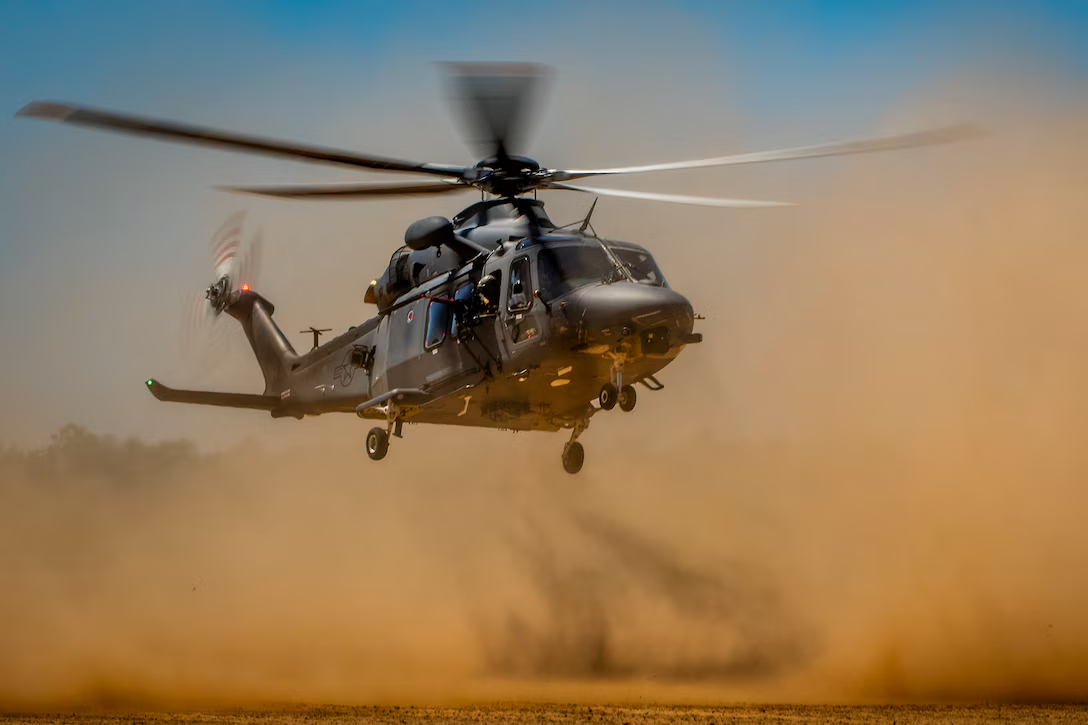
An MH-139A Grey Wolf helicopter lands on a soft dirt field at Eglin Air Force Base, Fla., April 5, 2024. The aircrew performed approaches to the field for austere landing tests, part of developmental testing for the aircraft.
That same day, the Air Force signed a $2.38 billion order for 22 additional F-15EX Eagle II fighters. The Grey Wolf contract then added another military aircraft award to Boeing’s substantial week.
Air Force Global Strike Command announced Aug. 31 that the Grey Wolf had reached initial operational capability on Aug. 10. That designation means the first helicopters and their crews are cleared to conduct real world missions.
The operational milestone allows the MH-139A to begin assuming intercontinental ballistic missile security duties from the aging UH-1N Huey. The Grey Wolf will replace the Huey at Malmstrom Air Force Base in Montana, F.E. Warren Air Force Base in Wyoming, and Minot Air Force Base in North Dakota.
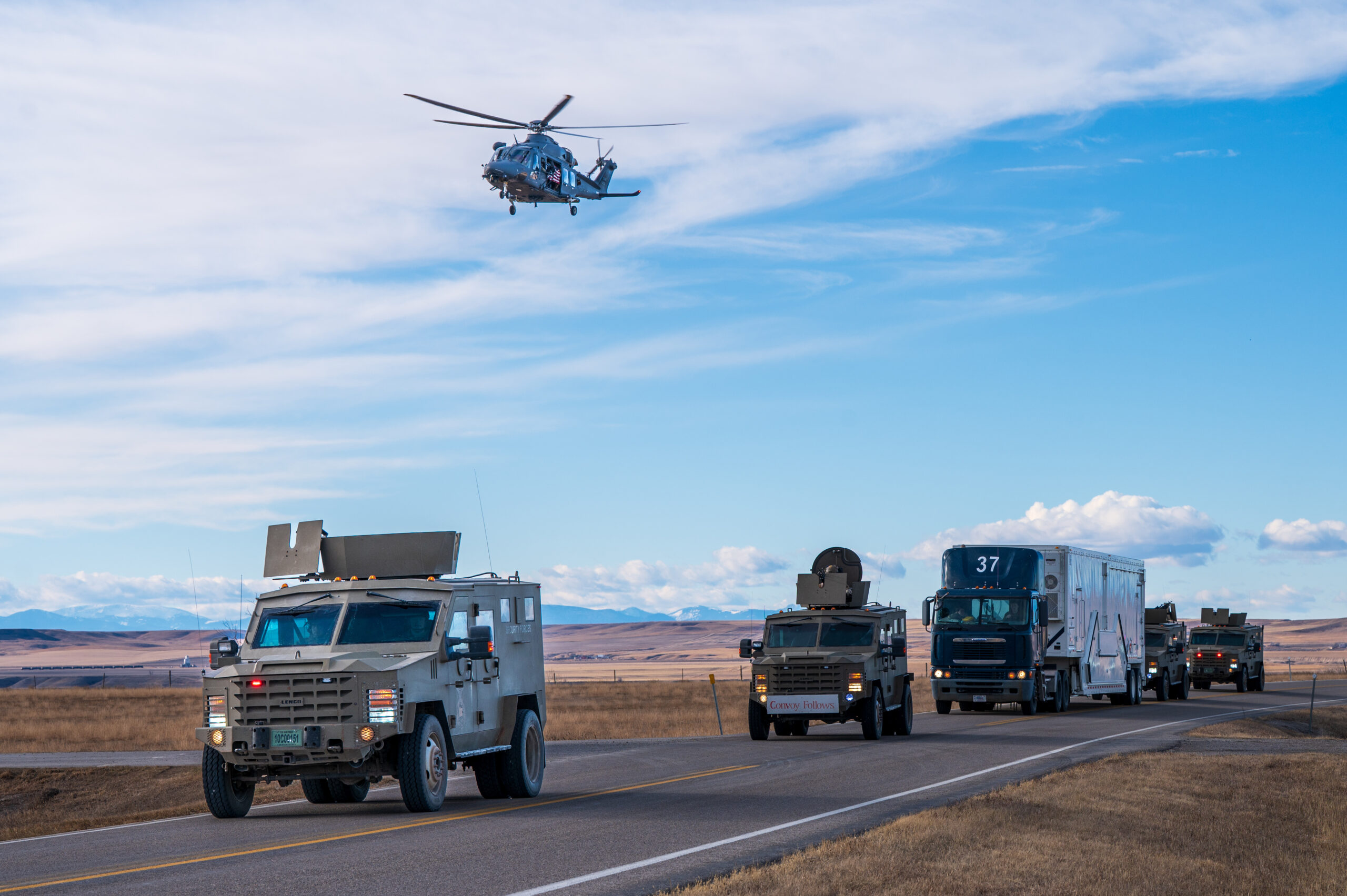
A U.S. Air Force MH-139 Grey Wolf assigned to the 40th Helicopter Squadron conducts its first operational mission alongside 341st Missile Security Operations Squadron convoys at Malmstrom Air Force Base, Montana, Jan. 8, 2026. The transition to the Grey Wolf strengthens nuclear deterrence operations by providing an agile and survivable transport platform for tactical response forces to protect critical assets. (U.S. Air Force photo by Airman 1st Class Jack Rodriguez Escamilla)
The MH-139A is a militarized version of Leonardo’s commercial AW139 helicopter. Global Strike Command says the Grey Wolf is nearly 50% faster than the Huey, can carry twice as many troops, and features improved defensive systems.
Two Grey Wolves assigned to the 40th Helicopter Squadron conducted the aircraft’s first operational mission Jan. 8 at Malmstrom. During the six hour flight, the helicopters escorted missile maintenance and armored security vehicles to and from a launch facility located more than 100 miles east of the base without refueling.
Gen. S.L. Davis, commander of Air Force Global Strike Command, said, “For more than half a century, the UH-1N Huey has been a key element of our Intercontinental Ballistic Missile security, and we owe a debt of gratitude to the crews who flew and maintained it over all these years.”
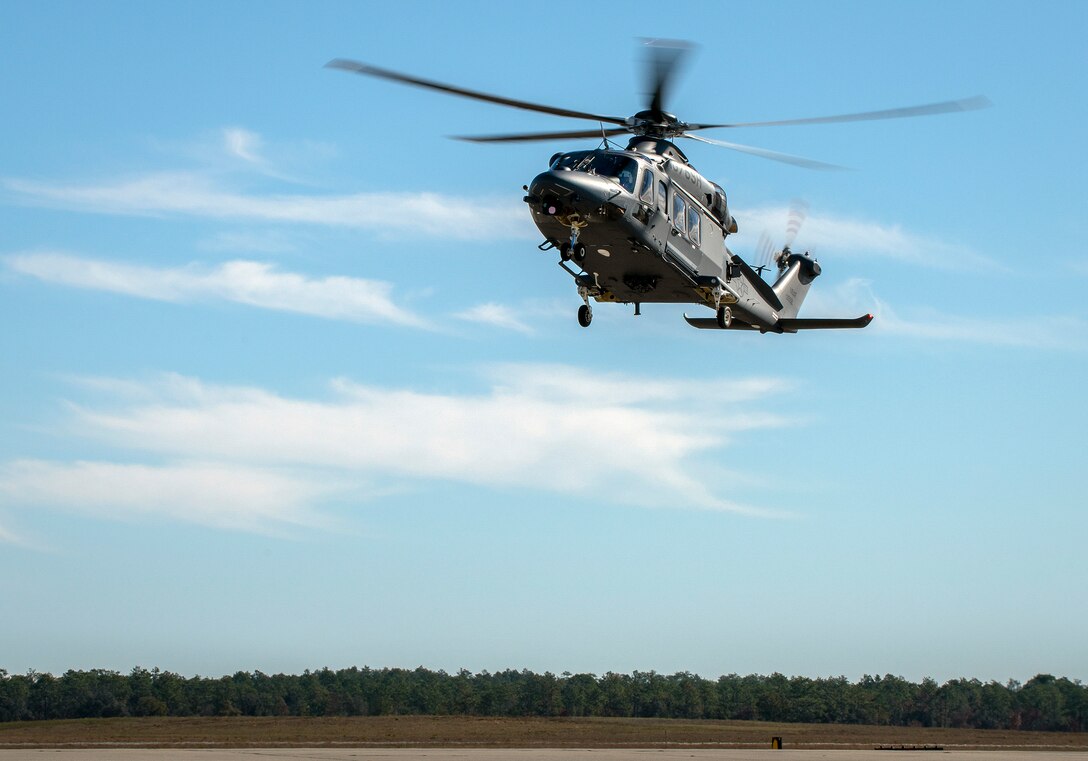
The MH-139A Grey Wolf was unveiled and named during the ceremony at Duke Field, Fla., Dec. 19, 2019.
“Securing these missiles demands our best efforts and the MH-139 will significantly improve our capabilities.”
Initial operational capability arrived years later than originally expected. The Air Force selected Boeing for the $2.4 billion Huey replacement contract in September 2018, and officials initially expected the Grey Wolf to reach the milestone in 2021.
Testing delays, Federal Aviation Administration certification setbacks, and integration problems extended the timeline, Military Times reported in January. The program’s planned size also contracted over the years as Air Force requirements and spending limits changed.
The Air Force once intended to purchase as many as 84 Grey Wolves, including aircraft that would transport officials around Washington. To comply with spending caps in the 2023 debt ceiling agreement, the service removed that VIP mission from its fiscal 2025 budget and reduced the planned purchase to 42 helicopters.
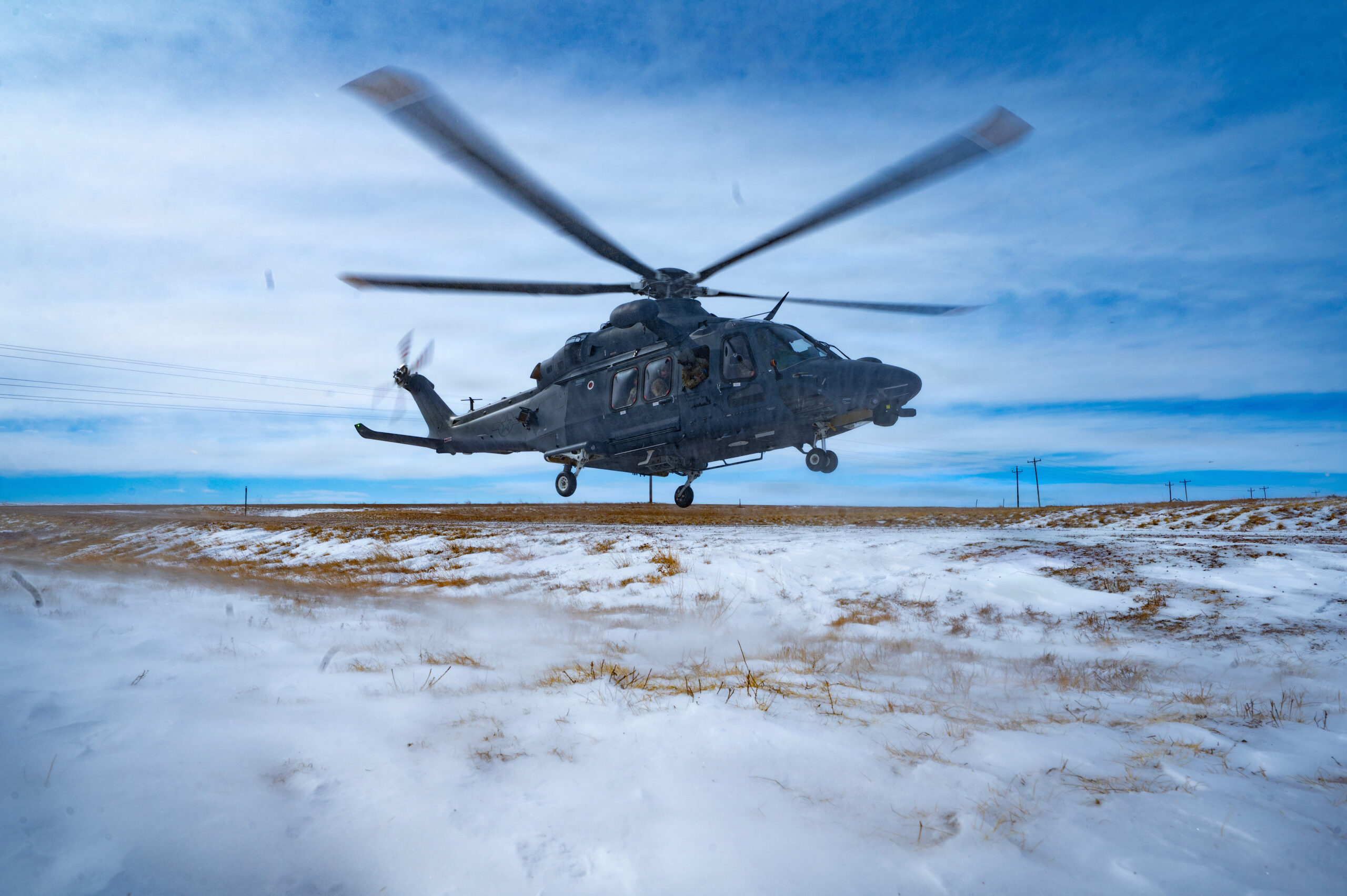
A 582nd Helicopter Group MH-139 Grey Wolf takes off near Pine Bluffs, Wyoming, Feb. 19, 2026. The 582 HG supports USSTRATCOM’s strategic deterrence mission by enabling airborne security and rapid response capabilities for missile wings across Air Force Global Strike Command. (U.S. Air Force photo by Airman 1st Class Nicholas Rowe)
With fewer aircraft sharing the program’s costs, the unit cost exceeded the critical threshold established under the Nunn-McCurdy law. That law requires the Pentagon to justify or cancel programs when their unit costs climb too high.
The Pentagon later increased the planned purchase to at least 56 helicopters, bringing the price below the critical threshold, according to a Selected Acquisition Report released in late August 2024. For fiscal 2027, the Air Force requested four more Grey Wolves.
The House passed defense policy bill and the Senate Armed Services Committee’s version would authorize eight helicopters, twice the Air Force request, though neither measure has become law. The House appropriators’ spending bill, which provides the funding, covers only four.
HH-60W combat rescue helicopters will instead assume the VIP transportation mission. They will replace Hueys that the Air Force says lack the speed, range, and lift required to provide cost effective support.