Navy Signs Off as 99% Complete USS John F. Kennedy Enters Major New Phase
Posted By
Common Defense
On
In National Security, News |
No Comments
The U.S. Navy has taken preliminary acceptance of the future USS John F. Kennedy, moving its newest aircraft carrier into another phase of testing and crew preparation. The Gerald R. Ford-class vessel is now approximately 99% complete.
The nuclear powered aircraft carrier completed acceptance sea trials in August. Preliminary acceptance allows the vessel and its crew to spend more time at sea while remaining work continues before formal delivery.
According to a Navy release, the milestone will allow the “ship and its crew to conduct at-sea testing and build underway proficiency while the shipbuilder completes final ship systems testing prior to formal delivery of the ship in Spring 2027.”
The arrangement gives the crew an opportunity to test and train aboard the carrier as final systems work proceeds. The shipbuilder will continue completing that testing before the Navy formally receives the vessel.
Image Credit: DoW
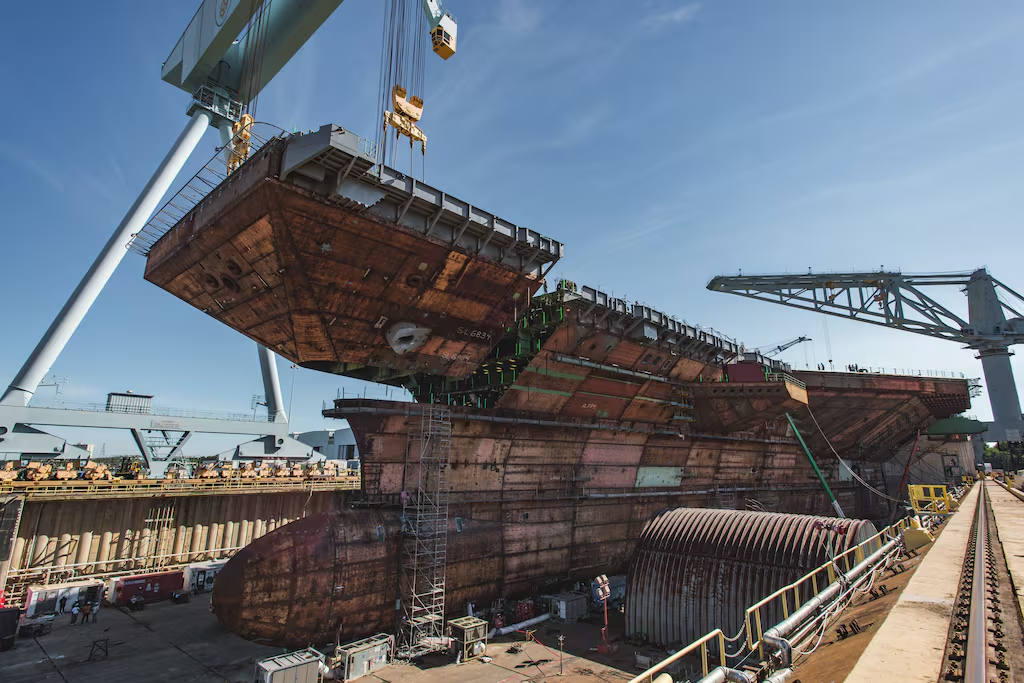
The USS John F. Kennedy undergoes ship construction on July 10, 2019, at Huntington Ingalls Industries Newport News Shipbuilding, Virginia. (Matt Hildreth/U.S. Navy)
“Achieving preliminary acceptance marks a new phase for the ship and her crew, allowing them to get more water under the keel as they test and train underway,” Capt. Mark Johnson, the Navy’s Program Manager for Gerald R. Ford-Class New Construction, said in the release.
The John F. Kennedy was launched in October 2019 and christened the following month. Its delivery had initially been scheduled for July 2025, but that timetable did not hold.
Navy equipment changes and equipment changes mandated by Congress caused delays lasting years. The latest setback was connected to work involving two of the carrier’s major systems, according to Navy budget documents.
The delay was necessary “to support completion of Advanced Arresting Gear (AAG) certification and continued Advanced Weapons Elevator (AWE) work,” according to the Navy’s fiscal 2026 budget documents.
Four remaining Advanced Weapons Elevators still require testing. Newport News Shipbuilding, a division of HII and the shipbuilder responsible for the John F. Kennedy, must also finish final ship systems testing.
Completion of that work could position the shipbuilder to turn the aircraft carrier over to the Navy next spring. The Navy release identified Spring 2027 as the period for formal delivery of the ship.
Image Credit: DoW
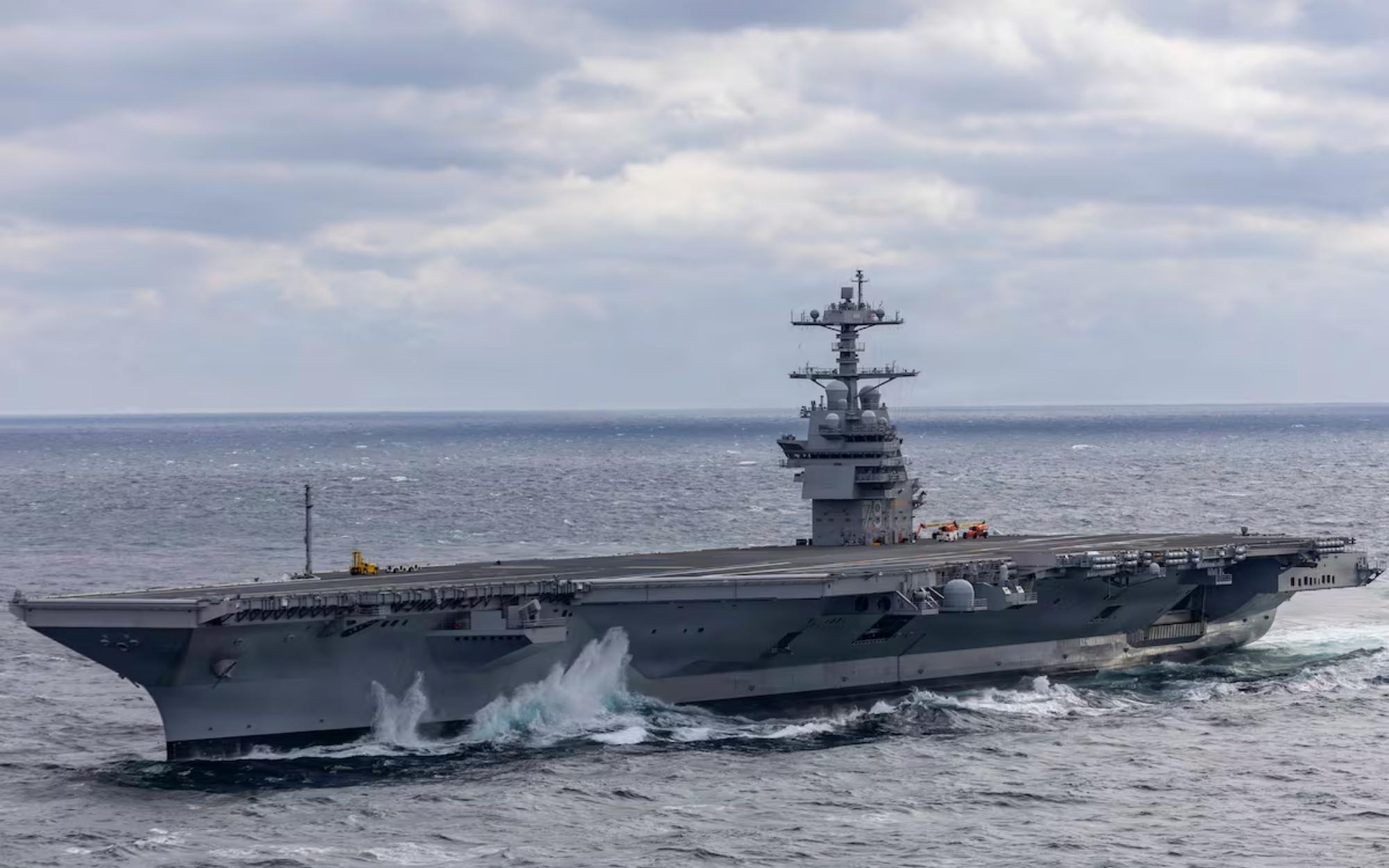
The USS John F. Kennedy transits the Atlantic Ocean during sea trials on Jan. 28, 2026. (MCS2 Kaitlin Young/U.S. Navy)
The sheer scale of the carrier makes the remaining work no small undertaking. The John F. Kennedy is 1,092 feet long, weighs 100,000 tons and carries an overall procurement cost of $13.2 billion, according to a December 2025 CRS report.
The carrier left Newport News, Virginia, on Tuesday to begin its transition to Naval Station Norfolk, according to a release from HII. That departure begins the next stage of the vessel’s movement toward integration into the fleet.
“Achieving preliminary acceptance is another step toward ensuring the U.S. Navy has the aircraft carriers it needs to carry out the mission of defending our nation,” said Bryan Caccavale, NNS vice president of program management. “It is an honor to see Kennedy depart and begin integration into the fleet.”
Image Credit: DoW
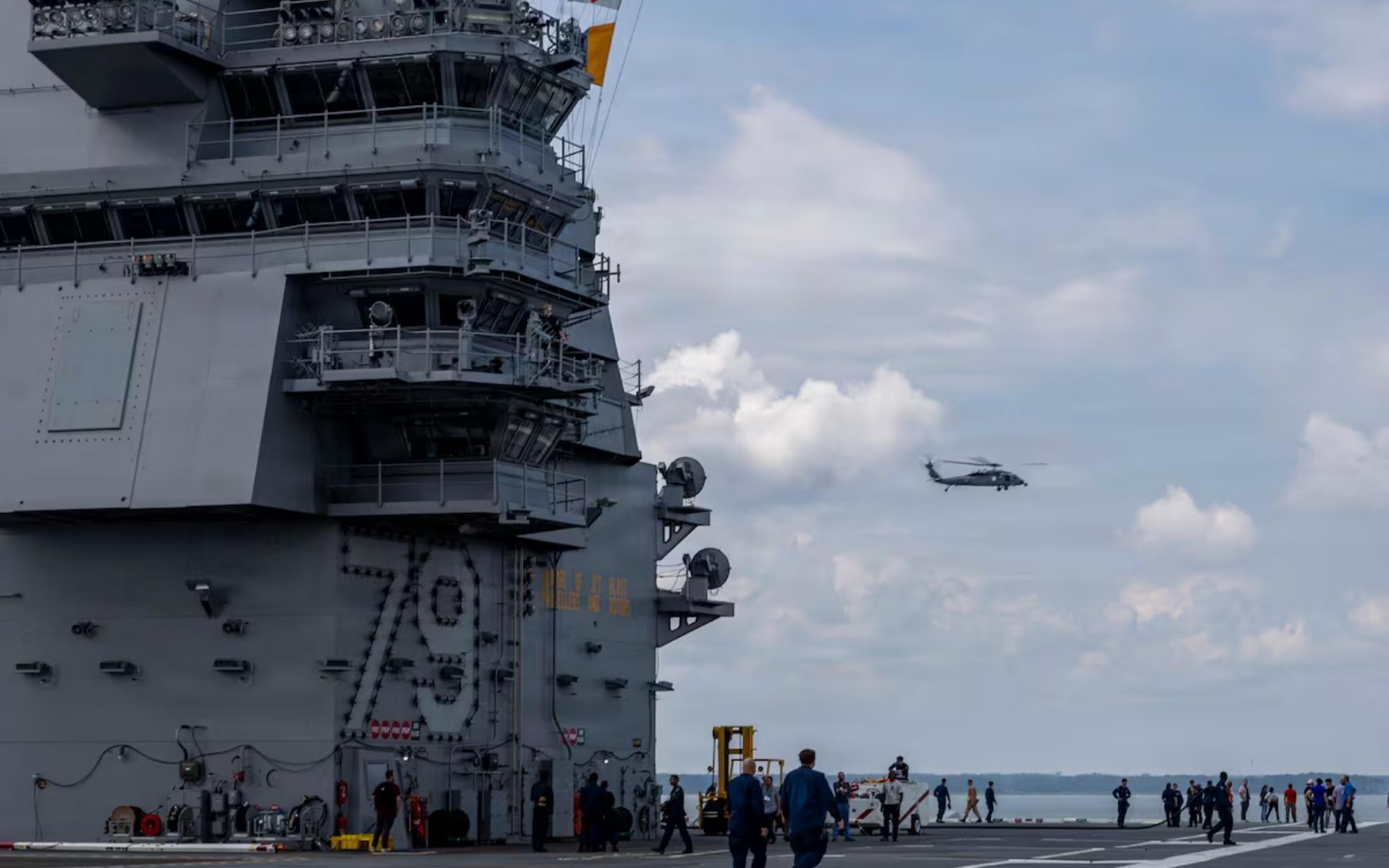
An MH-60R Seahawk escorts the USS John F. Kennedy as it departs for acceptance trials on Aug.12, 2026. (MCS Kaitlyn Bailey/U.S. Navy)
Preliminary acceptance does not mark formal delivery, but it permits more testing and training at sea while Newport News Shipbuilding completes its responsibilities. The carrier’s crew can also continue building underway proficiency during that period.
The Navy now has a 99% complete carrier moving from Newport News toward Naval Station Norfolk while testing continues on its remaining systems. Formal delivery remains planned for Spring 2027, following completion of ship systems testing and the outstanding elevator work.