New Zealand and Australia Seal Major Pact to Deepen Naval Integration
Posted By
Common Defense
On
In National Security, News |
No Comments
The Royal New Zealand Navy and Royal Australian Navy signed Plan Tasman in Canberra this month, formalizing a blueprint intended to integrate the neighboring sea services more closely.
The pact follows the Tasman Navy Framework, which the two navies established in November 2024. An NZDF spokesperson described Plan Tasman as a strategic guidance document that will govern the relationship between the services.
Plan Tasman gives the navies a formal structure for pursuing deeper organizational and operational integration. It also identifies specific functional areas in which Australia and New Zealand will cooperate.
“It established the strategic dialogue architecture, defines the overarching goal of strengthening organizational and operational integration, and outlines the functional areas of cooperation,” the spokesperson told Defense News.
One new element is an annual strategic dialogue between the navies. The two deputy service chiefs will lead that dialogue, which will include a working group devoted to various cooperation tasks.
The agreement supports the two countries’ commitment to closer defense relations and their shared vision for increasingly integrated naval cooperation. That cooperation is aimed at securing the Indo-Pacific region.
The pact brings together naval services that differ considerably in scale. The Royal Australian Navy, established in 1901, has 16,000 sailors, about eight times the number serving in the Royal New Zealand Navy.
Australia’s navy operates from eight bases. New Zealand’s navy has one base, Devonport, located in Auckland.
Image Credit: DoW
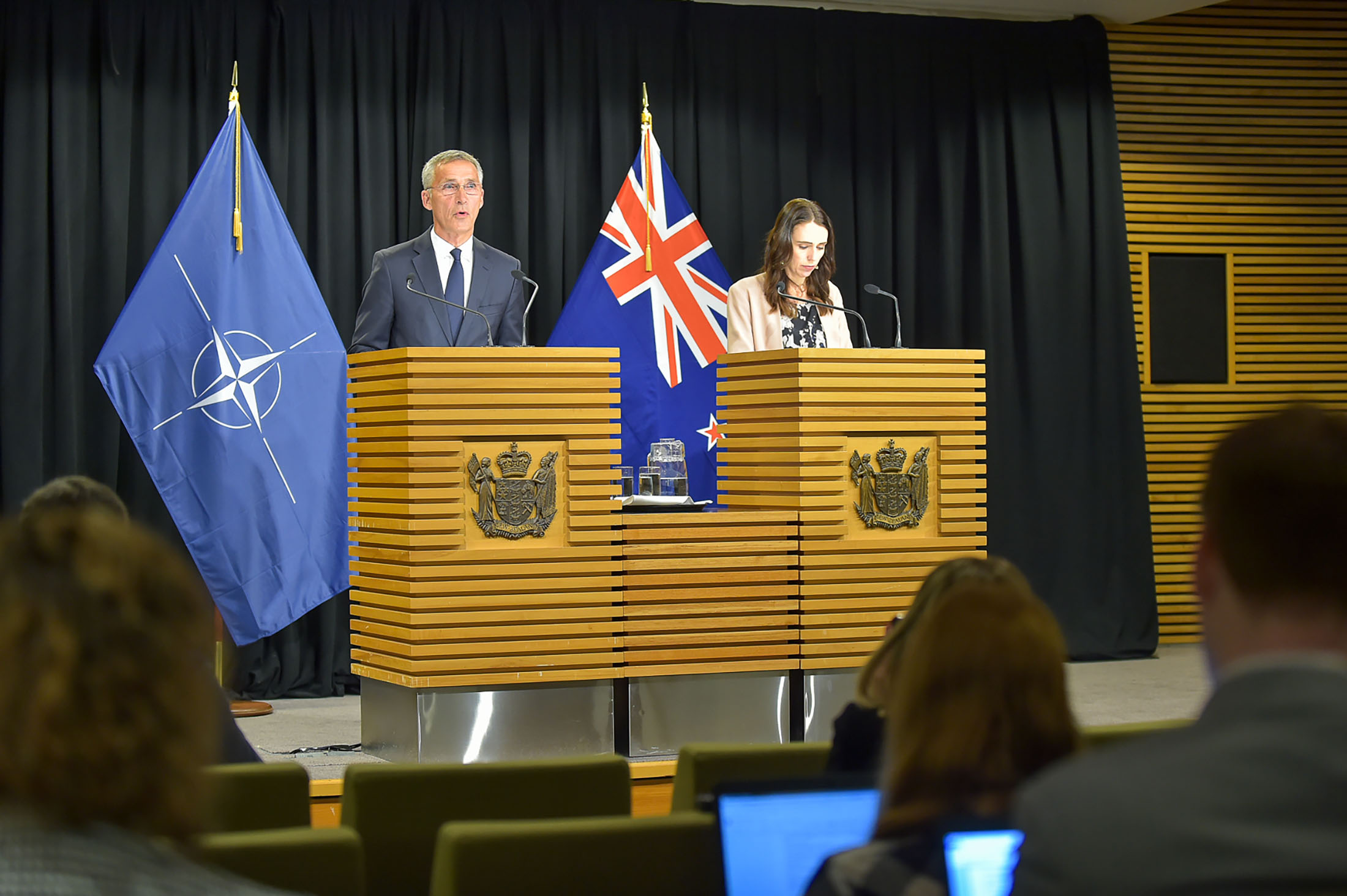
NATO Secretary General Jens Stoltenberg and Jacinda Ardern Prime Minister of New Zealand
Women account for about 25% of personnel in both navies. That proportion is shared even though the Australian service has a much larger force and a broader base network.
The two fleets also operate Anzac-class frigates. Seven of the 387 foot frigates serve with Australia, while two serve with New Zealand.
Those frigates, along with most of the Royal New Zealand Navy fleet, are expected to reach the end of their service lives in the mid 2030s. That approaching timeline sits alongside separate procurement decisions by both countries.
In April 2026, the Royal Australian Navy signed a contract for 11 Mogami-class frigates. New Zealand has not yet decided whether to select the Japanese design or Britain’s Type 31 frigate.
Image Credit: DoW
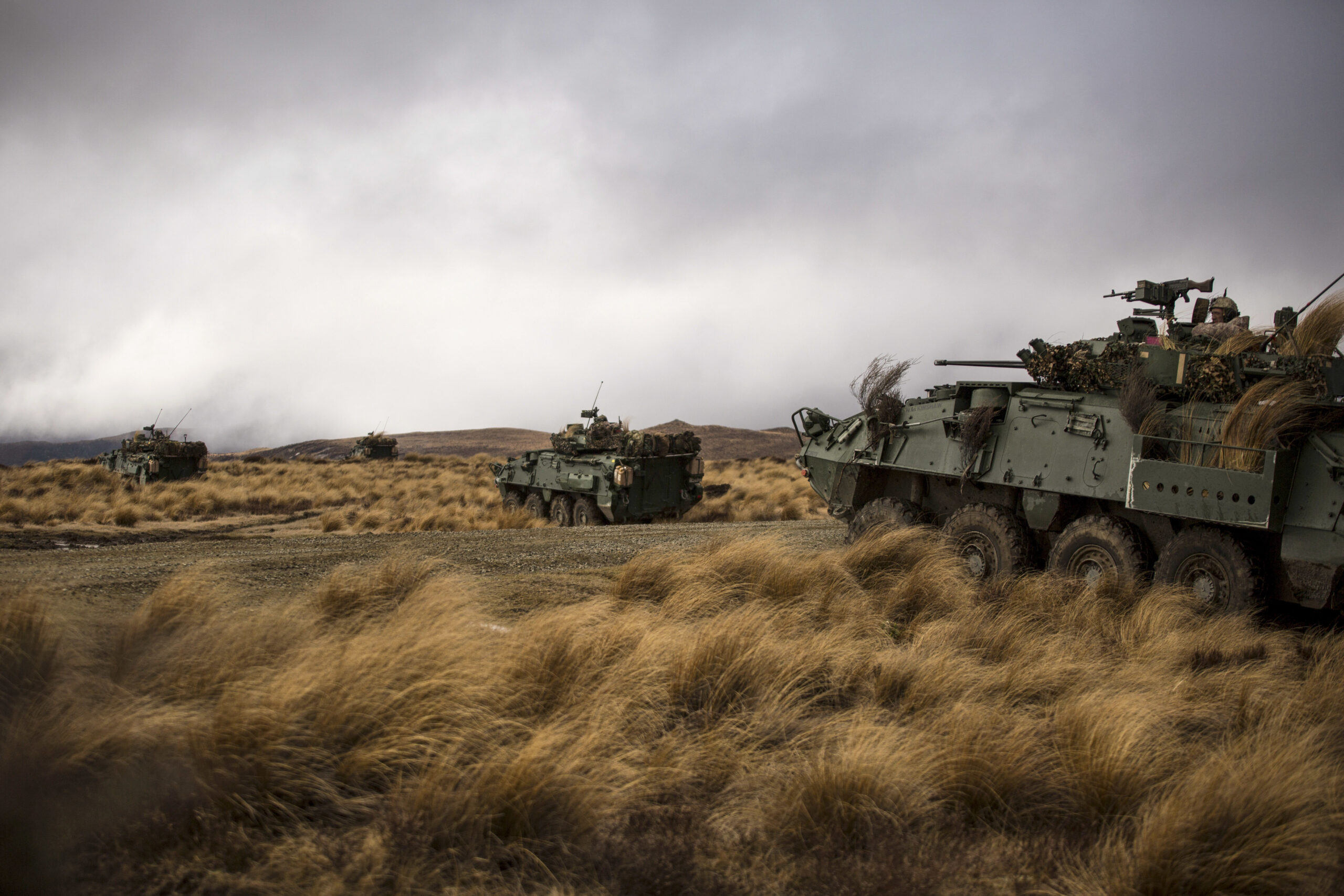
U.S. Marines and Royal New Zealand Army soldiers call for fire from a Light Armoured Vehicle as part of exercise Joint Assault Signals Company Black, Waiouru Military Camp, New Zealand, Sept. 26, 2018. The Marines are with 1st Brigade, 5th Air Naval Gunfire Liaison Company, III Marine Expeditionary Force Information Group. (U.S. Marine Corps photo by Sgt. Jordan E. Gilbert)
Indonesia and Poland have ordered the Type 31 frigate. The source did not identify a date by which New Zealand intends to make its selection between the two designs.
New Zealand has already moved forward with another naval aviation purchase. In August 2025, the Royal New Zealand Navy ordered five MH-60R Seahawks to replace its existing Kaman Seasprites.
The Seasprites have been in service since 2001. The five Seahawks are intended to take over their role as New Zealand continues making decisions about the future composition of its naval forces.
Image Credit: DoW
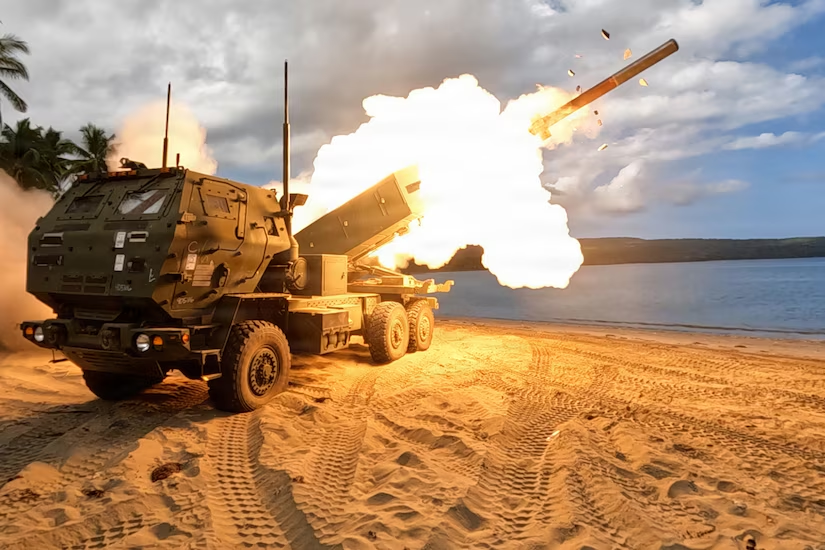
A U.S. Army M142 High Mobility Artillery Rocket System from 5th Battalion, 3rd Artillery Regiment, 7th Infantry Division/ Multi-Domain Command- Pacific fires for a training iteration in support of Exercise Balikatan 26, in Palawan, Philippines, April 27, 2026. Balikatan is a longstanding annual exercise between the Armed Forces of the Philippines and U.S. military that represents the strength of our alliance, improves our capable combined force, and demonstrates our commitment to regional peace and prosperity. (U.S. Army photo by Staff Sgt. Brandon Rickert) (Staff Sgt. Brandon Rickert)
New Zealand is also strengthening defense links elsewhere in the region. In December 2025, it signed defense agreements with Japan, adding another formal relationship to its regional cooperation efforts.
Two Japanese warships visited New Zealand last year. A Mogami-class frigate also visited Wellington in May this year, placing one of the designs under consideration in a New Zealand port.
Two months later, India and New Zealand signed a defense cooperation agreement. The two countries also pledged to strengthen maritime security cooperation after upgrading their diplomatic relations.
Plan Tasman now provides the central guidance for the naval relationship between Australia and New Zealand. Through annual strategic dialogue, working groups and defined cooperation areas, the pact formalizes how the two neighboring services plan to pursue closer integration.