The Wall Street Journal editorial board posed the blunt question looming over New York politics: “Is New York stuck with Kathy Hochul?” Public polling suggests [1] voters may give the governor four more years on Nov. 3, but Republican Bruce Blakeman insists the race is far from settled.
The Journal’s case against Hochul centers on the state’s decline during her tenure, including continued population losses. Its verdict was unsparing: “Hochul’s New York has punitive taxes, a bloated welfare state, high utility costs, and too many failing schools.”
Blakeman, the Nassau County executive and Hochul’s GOP opponent, says his campaign’s numbers paint a far more competitive picture than public surveys. Speaking by phone between campaign stops, he declared, “Our private polling shows we’re in a virtual dead heat.”
Blakeman has released some private polling showing a tighter contest, while saying Hochul has not released her internal surveys. “She has to be seeing the same things we are,” he said. “People aren’t buying it anymore.”
He argues that New Yorkers have had five years to judge Hochul’s leadership and understand what is happening across the state. Blakeman predicts that mounting frustration will produce a political stunner, saying, “we are going to shock the world with a big victory.”
Taxes provide plenty of fuel for that argument. Citing the nonpartisan Tax Foundation, the Journal noted that New York ranks No. 50 among the states in overall competitiveness, 47th worst for property taxes, 42nd for sales taxes and 50th for individual income taxes.
The Journal also pointed to the city and state’s top tax rates, which, when combined with the top federal rate, take more than half of top earners’ income. The editorial asked the obvious question: “Is it any wonder Florida’s 0% income tax looks attractive?”
Blakeman believes voters connect their affordability struggles with Hochul’s policies. He says “New Yorkers aren’t buying Hochul’s brand of leadership anymore” and argues that “the affordability problems people have are directly related to her polices.”
Utility bills are another major piece of his campaign. Blakeman frequently notes that New York’s utility rates are 70% above the national average, a painful figure that fits neatly into his broader indictment of Albany’s handling of everyday costs.
Ken Girardin, a Manhattan Institute fellow, recently wrote in The Post that Con Ed bills in the five boroughs are inflated by the city’s property taxes. The city allows the utility to pass those costs to customers without explanation.
The Public Service Commission has criticized that practice and recently allowed Con Ed to itemize the property tax impact within customers’ “delivery charge.” That change is scheduled to take effect next year.
The issue fits Blakeman’s agenda, which he summarizes as “lower taxes, lower utility rates and better safety from crime.” At the candidates’ lone debate, he stayed on offense while Hochul blamed President Trump for the state’s problems and labeled Blakeman a “Trump clone.”
Hochul’s television and social media advertising has largely followed that argument. Her campaign hopes to capitalize on Trump’s declining popularity in New York and nationally, much of it tied to the war in Iran.
Blakeman rejects the attempted handoff of blame. “Trump didn’t cause our problems with taxes and utility rates. Hochul did that,” he said, adding that if Trump’s policies were responsible, every state would be experiencing the same trouble.
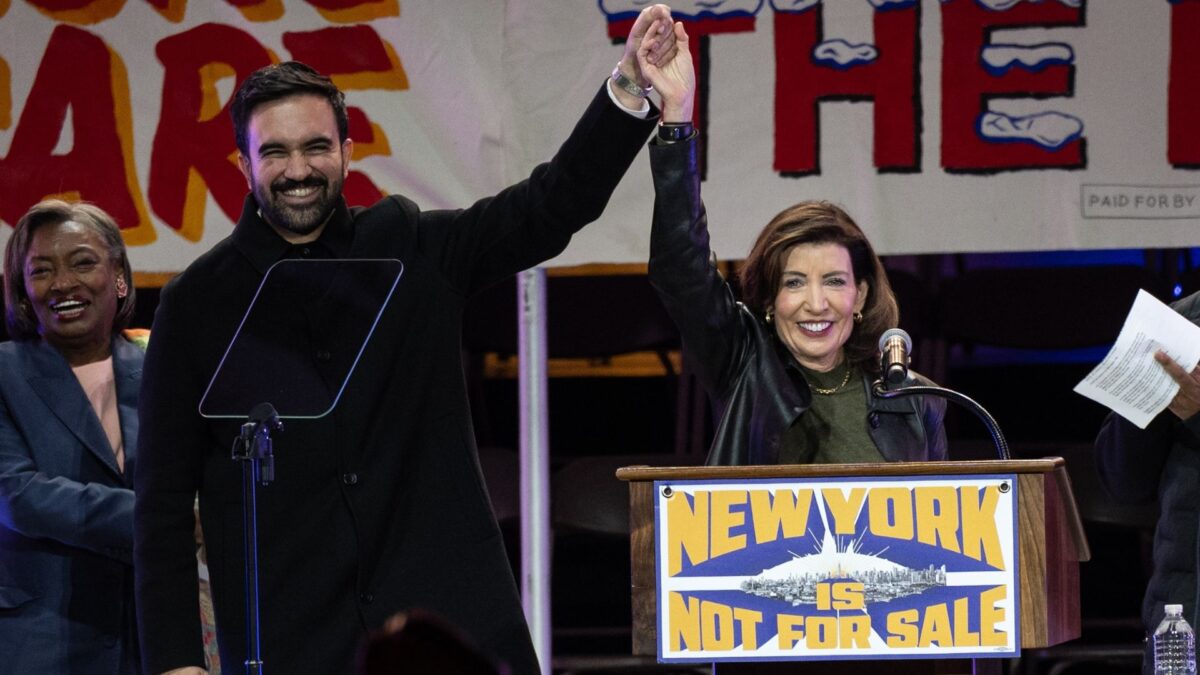
Hochul has also embraced Mayor Mamdani, using state funds to support his free stuff agenda and rushing his property tax proposal through the Legislature. Their first joint campaign appearance, held at a Brooklyn park, lasted only 15 minutes.
Blakeman considers more appearances with Mamdani an advantage for his campaign. “The more she campaigns with him, the better for me,” he claimed, while City & State reported that enthusiasm for the mayor at the park exceeded enthusiasm for Hochul.