The Pentagon announced a $2.82 billion contract with Boeing on Tuesday for 15 additional KC-46A Pegasus tankers. The award covers the final production lot under the program’s original 2011 contract.
The latest purchase costs about $350 million more than the previous lot of 15 tankers. The Air Force bought that group for $2.47 billion one year ago.
The earlier lot is expected to be completed by the middle of 2029, according to the Pentagon. Work on the newly announced lot is expected to finish by the middle of 2030.
The Air Force has received 116 KC-46As so far. Boeing said 203 aircraft are either under contract or already in service worldwide, with Japan and Israel also operating the tanker.
Boeing credited the Air Force for continuing the partnership as the original contract reaches its final production lot. Jake Kwasnik, KC-46 program vice president, emphasized the aircraft’s role in military operations.
“We’re grateful for the trust the U.S. Air Force continues to place in our team,” Kwasnik said in Boeing’s release. “The KC-46 plays an important role in enabling military operations around the world, and we look forward to building on that partnership while staying focused on delivering on our commitments to support the warfighter.”
Tuesday’s award is the last of 13 production lots priced into the original contract. Boeing filings with the Securities and Exchange Commission show that the newly awarded group closes out that production arrangement.
The Air Force, however, is not planning to stop buying KC-46As once the original contract is complete. The service intends to purchase as many as 75 additional aircraft through a program called Tanker Production Extension, according to an April contracting notice.
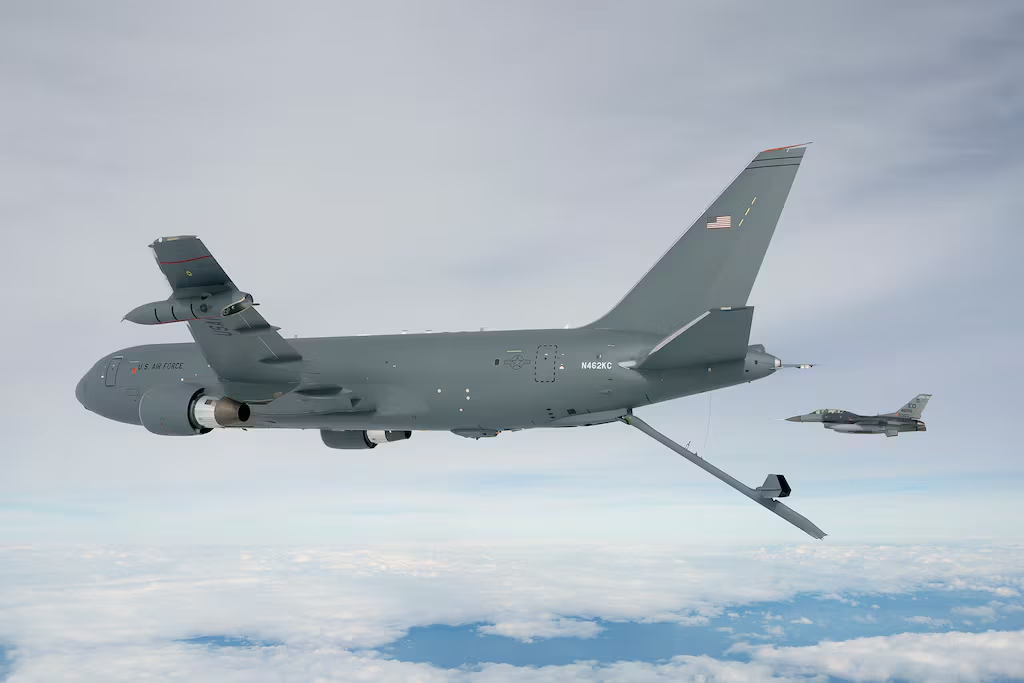
The service wants a total of 263 KC-46As for its own fleet. Air Force officials say that number would fully replace the KC-135 tankers built during the 1950s and early 1960s.
Any purchase of the additional 75 tankers depends on Boeing addressing existing problems with the aircraft, Air Force Vice Chief of Staff Gen. John Lamontagne said, according to Reuters. He did not specifically identify the deficiencies during his remarks.
The most widely known KC-46A problems involve the aircraft’s refueling boom and its Remote Vision System, known as RVS. Boom operators use the system’s cameras to guide the boom during aerial refueling operations.
“We are working through a couple of issues with the contractor, and we are not going to get a new contract for another 75 KC-46s until we work through some of those deficiencies,” Lamontagne told a Senate Armed Services subcommittee on March 4. He said a decision was likely two years away.
Boeing said in June that it had completed the first phase of flight testing for the redesigned RVS 2.0. The Air Force has projected that the upgraded system will be fielded in summer 2027, which is three years later than originally planned.
The KC-46 program has also delivered a steep financial hit to Boeing. The company built the tanker under a firm fixed price contract, leaving Boeing responsible for covering cost overruns.
Boeing has recorded more than $7 billion in losses on the program. That total includes $565 million recorded late last year, which the company attributed to higher production costs.
The Air Force has said the main issues preventing KC-46s from being ready to fly are aerial refueling system reliability and shortages of parts. Those problems remain central as the service considers its next round of tanker purchases.
In May, the Air Force and Boeing agreed to a plan intended to improve KC-46 availability. Along with funding included in the fiscal 2027 budget request, the plan is expected to increase availability by more than 20% by 2030.
The $2.82 billion award therefore completes the original 13 lot production plan while the Air Force weighs a much larger follow up purchase. Boeing’s progress on identified deficiencies will help determine when that potential contract for 75 more tankers moves ahead.