War Secretary Pete Hegseth made it crystal clear in Singapore: China’s military surge is not something to shrug off, and America’s allies across Asia need to stop relying on Washington’s wallet and start investing in their own defense.
Standing before an audience of international defense leaders at the Shangri-La Dialogue—the top Asian security summit—Hegseth didn’t mince words. He said the world’s “rightful alarm” over China’s expanding military footprint is entirely justified.
Beijing’s buildup, he warned, aimed to tilt the regional balance of power toward a single dominating force: the Chinese Communist Party.
Hegseth spoke with the kind of clarity and conviction that’s become his signature under President Trump’s leadership.
Trump's Sovereign Wealth Fund: What Could It Mean For Your Money?
“A Pacific dominated by any hegemon would unravel the regional balance of power,” Hegseth asserted, leaving no doubt which hegemon he was referring to. “No state, including China, can impose its will on the region.”
For decades, too many nations expected the United States to foot the bill for their security. Hegseth was blunt that those days are over.
He backed Trump’s insistence that America’s wealthier partners shoulder more of their own defense burdens. The War Secretary called on allies to push defense spending to 3.5% of GDP while the U.S. pours $1.5 trillion into maintaining its edge.
“Less Shangri-La, more ships, more subs,” Hegseth quipped, highlighting that endless conferences don’t stop aggression—military strength does.
FREE Gun Law Map: Laws Don't Pause During Social Unrest

It was a wake-up call to those who still think talking circles replace putting steel in the sea.
Hegseth stressed that stability requires resolve, not rhetoric.
“What allies want, and what the United States delivers, is strength that is disciplined, resolve that is steady, and leadership confident enough to carry a big stick,” he said, echoing a distinctly Rooseveltian tone that resonated deeply among the allied representatives.
MORE NEWS: Suspected Islamic Extremist Hunted After Berlin Pride Van Attack Kills 1, Injures 16 [WATCH]
Interestingly, Hegseth kept the door open for measured cooperation with Beijing, noting that U.S.-China military communication has improved under Trump’s pragmatic diplomacy.
“We are meeting more frequently with our Chinese counterparts,” he said, emphasizing that open channels don’t mean soft policies—they mean managing risks from a position of strength.
Chinese delegate Zhou Bo, a retired People’s Liberation Army colonel, admitted relations had “improved,” attributing it to President Trump’s recent visit to China.
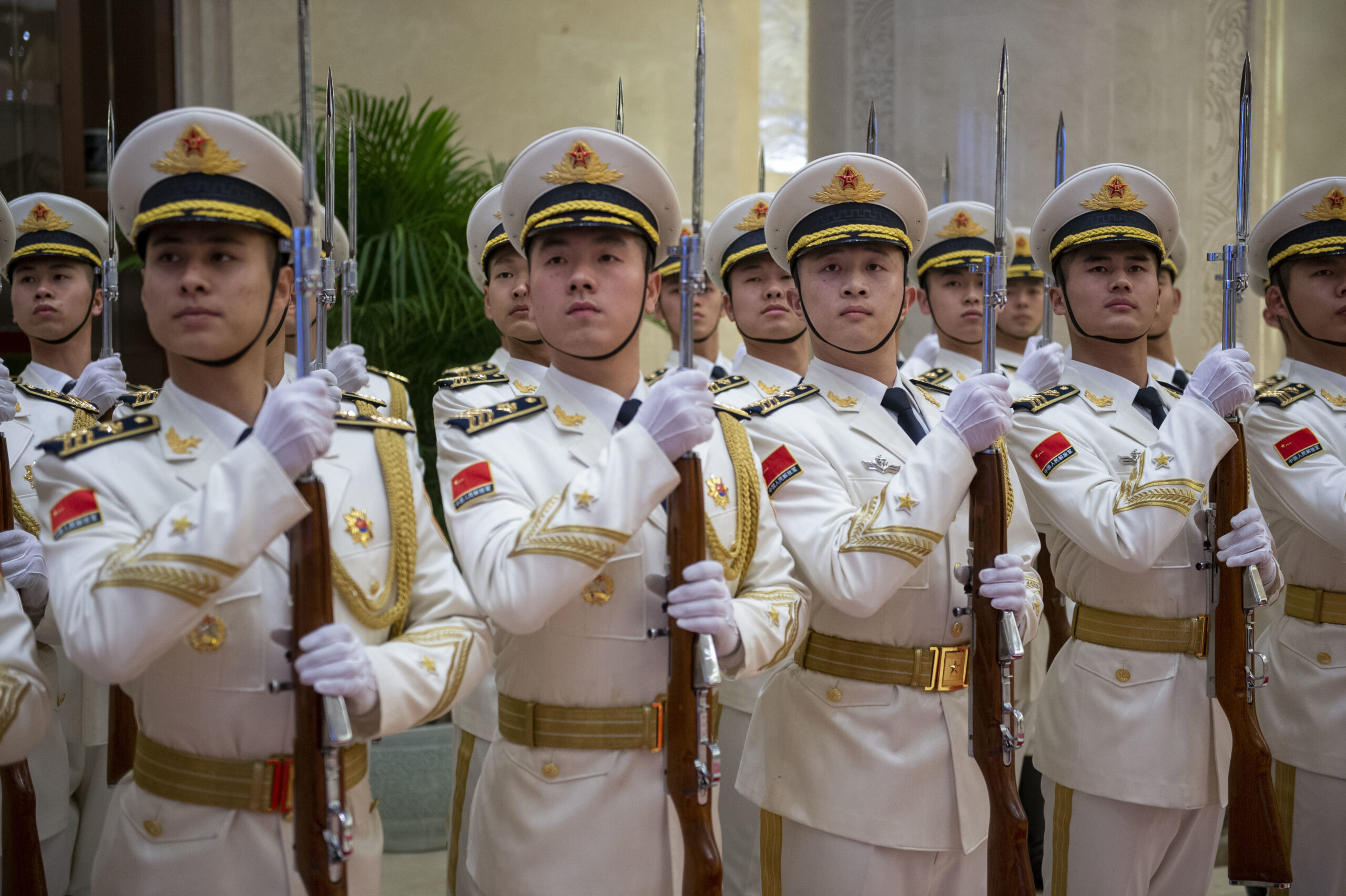
That acknowledgment alone was a diplomatic victory in a region wary of China’s growing influence.
Still, Hegseth refused to indulge any illusions. Beijing skipped the summit for a second year running, continuing its habit of avoiding open forums where its intentions might be challenged.
Last year, Chinese officials accused Hegseth of being “vilifying.” This year, they got a sober reality check wrapped in calm authority.
On the issue of burden-sharing, Hegseth reaffirmed Trump’s long-held position: “The era of the United States subsidizing the defense of wealthy nations is over. We need partners, not protectorates.”
That line drew applause from U.S. allies who’ve recognized the need to invest more seriously in their own security.
He praised nations stepping up: South Korea boosting readiness against northern aggression, Australia committing to regional security, and Japan rebuilding its military posture.
“Tokyo and Washington must each pull our weight,” he said, highlighting Japan’s recent defense modernization as a model for others in the Indo-Pacific.

Pivoting briefly to the Middle East, Hegseth dismissed claims that America’s attention was drifting away from the Indo-Pacific toward Iran. He reaffirmed U.S. capability to handle both theaters simultaneously.
“If necessary, we are more than capable of resuming strikes,” he said, making clear that American deterrence remains as sharp as ever.
When asked about Taiwan—the flashpoint China hates being reminded of—Hegseth remained tight-lipped but confident. The island awaits an arms package rumored to be worth $14 billion, but final approval, he said, rests with President Trump.
“Those decisions will depend on the president and the nature of that relationship,” Hegseth told reporters, signaling continuity in U.S. policy despite renewed engagement with Beijing.
Trump himself, back in Washington, continues his doctrine of peace through strength—demanding allies contribute to their own security and enemies think twice before challenging American power.
Hegseth’s message in Singapore carried that same spirit across the Pacific: strength is shared, but leadership must be earned.
For decades, the U.S. carried the burden of safeguarding free nations. Now, under Trump and Hegseth, America’s allies are being invited—not begged—to stand tall beside her.
The message couldn’t be clearer: China’s challenge will be met not with appeasement, but with power, partnership, and purpose.
The opinions expressed by contributors and/or content partners are their own and do not necessarily reflect the views of Objectivist. Contact us for guidelines on submitting your own commentary.
Share your opinion
COMMENT POLICY: We have no tolerance for comments containing violence, racism, vulgarity, hard-core profanity, all caps, or discourteous behavior. Thank you for partnering with us to maintain a courteous and useful public environment!