WHAT YOU NEED TO KNOW
- The Air Force plans to make a new point defense career field operational within two years.
- Dedicated airmen will protect bases from drones and missiles using detection, electronic warfare and kinetic systems.
- Tandem Defense received a contract worth up to $90 million for drones designed to counter other drones.
- Wilsbach said two senior airmen tracked an Iranian drone swarm and shot down 10 approaching their base.
The Air Force plans to establish a new career field dedicated to protecting bases from drones and missiles, turning installation defense into a primary responsibility for specially trained airmen.
The move follows a year of experiments involving artificial intelligence, electronic warfare, detection systems and weapons capable of physically destroying drones.
Air Force Chief of Staff Gen. Ken Wilsbach announced Monday that the point defense career field will become operational within two years.
He said the service is working to transform installation defense from a “side hustle” into a core Air Force mission.
Trump's Sovereign Wealth Fund: What Could It Mean For Your Money?
MORE NEWS: Heroic San Diego Bystanders Chase Down Suspected Tesla Thief After Woman is Struck [WATCH]
Point defense focuses on protecting a particular location, such as an air base, against incoming threats. That mission differs from defending a broader region or larger section of airspace.
The Air Force told Task & Purpose that officials are still formalizing the career path and could not provide additional details about the specialty.
The service did not specify whether the field will include enlisted airmen, officers or both.
Officials also have not said whether serving airmen will be allowed to retrain into the new field.
FREE Gun Law Map: Laws Don't Pause During Social Unrest
The Air Force has not fully identified which weapons and systems these point defense airmen will operate.
Testing has already offered some clues about the potential mission.
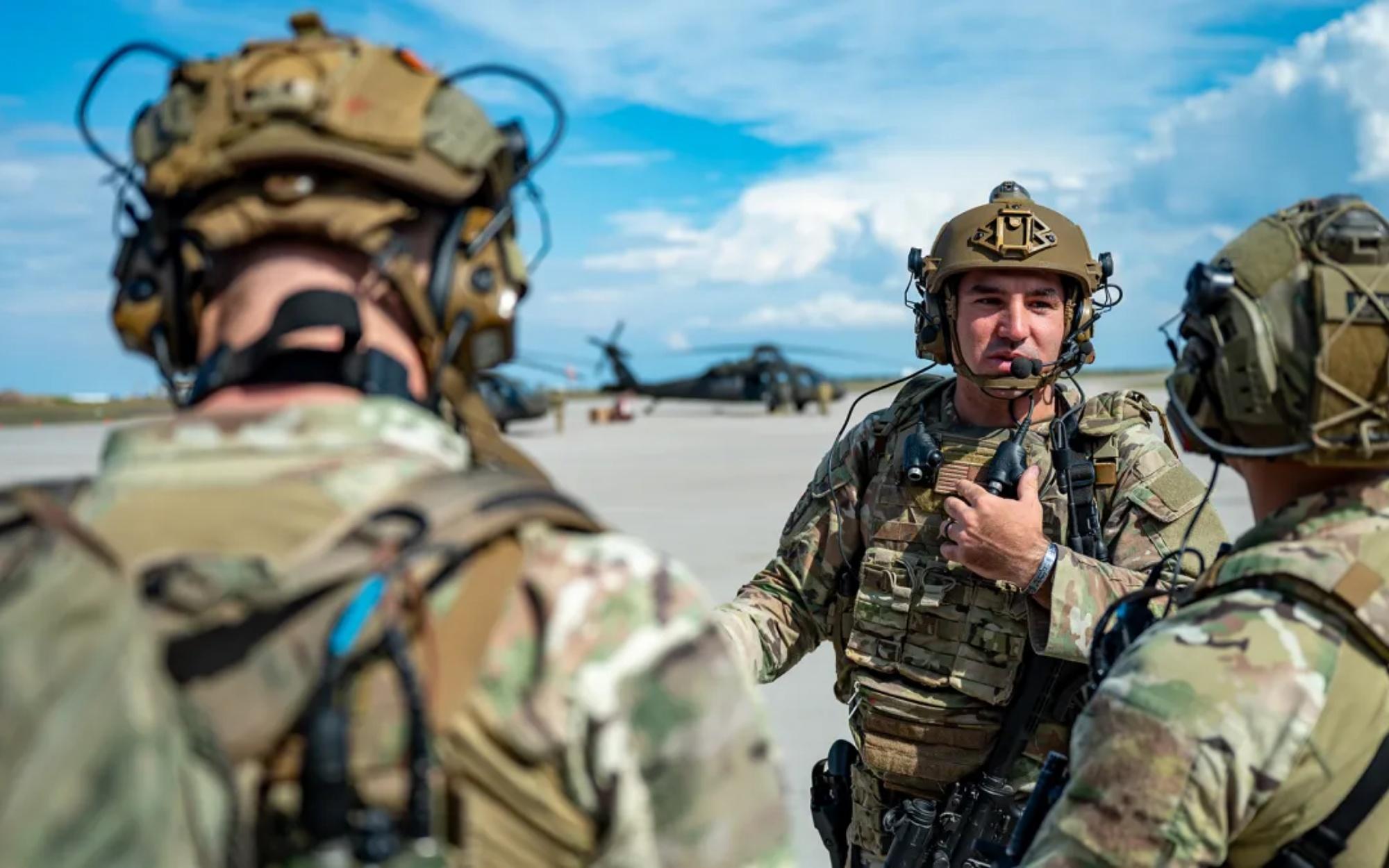
The 325th Security Forces Squadron used an M870 shotgun against simulated small unmanned aircraft systems and planned further training for approximately 210 airmen.
MORE NEWS: Felon Punches Bailiff in Throat, Attacks Deputies in Wild Ohio Courthouse Escape Bid [WATCH]
That training was intended to qualify airmen on the shotgun and the SMASH 2000 fire control system.
The computerized firearm sight is mounted on a rail, tracks moving drones and assists the shooter with aiming.
The Air Force began experimenting with dedicated point defense organizations before Wilsbach revealed the planned career field.
In July, officials described point defense flights containing roughly 20 enlisted airmen selected from aviation and battle management backgrounds.
Those airmen were completing about three weeks of instruction at the Joint Counter-Unmanned Aircraft Systems University at Fort Sill, Oklahoma.
The Air Force was also working with the school to create a training syllabus for the eventual specialty.
In early August, the 31st Air Task Force conducted a weeklong training event at Hurlburt Field, Florida, expanding the service’s work on defenses against small drones.
The event featured systems powered by artificial intelligence that detected and tracked objects in the air.
MORE NEWS: Trump Says U.S. ‘Hopefully’ Nears End of Iran War as Saudi Arabia and Houthis Trade Strikes
Personnel also trained with electronic warfare and methods for physically intercepting hostile drones. The Air Force called that final defensive layer “final denial.”
“We trained our personnel on counter-small unmanned aircraft systems architecture and employed unique solutions for airmen to track, jam and kinetically defeat sUAS threats,” said Col. Brad Dvorak, commander of the 31st Air Task Force.
The emerging specialty is accompanied by Air Force spending on counter drone technology. In July, the service awarded Tandem Defense a contract worth up to $90 million for aerial denial unmanned aircraft systems, essentially drones designed to counter other drones.

The contract includes support equipment, operator instruction and field service support, and it continues through July 2028.
The Air Force obligated $98,000 when the award was made.
Another investment is the Small Unmanned Air Defense System, which received $51.8 million in fiscal 2026 procurement funding.
Air Force officials previously said its mobile variant could accompany point defense flights protecting expeditionary airfields.
Wilsbach also announced a Point Defense Weapon System combining kinetic and nonkinetic capabilities for defending air bases. He provided few specifics about the weapons that will be included in that system.
The effort became more urgent after Iranian drones and missiles repeatedly struck U.S. installations during Operation Epic Fury.
Drone attacks caused the majority of U.S. service member deaths and casualties during the conflict.
During his Monday address, Wilsbach described two senior airmen who tracked a swarm of Iranian drones approaching their base and shot down 10.
Their actions offered a stark example of the mission the new point defense field is intended to make permanent.
“For decades, American air and space power has often operated from a position of sanctuary. Those days are over,” Wilsbach said.
The opinions expressed by contributors and/or content partners are their own and do not necessarily reflect the views of Objectivist. Contact us for guidelines on submitting your own commentary.
Share your opinion
COMMENT POLICY: We have no tolerance for comments containing violence, racism, vulgarity, hard-core profanity, all caps, or discourteous behavior. Thank you for partnering with us to maintain a courteous and useful public environment!