Sen. Ted Cruz, R-Texas, said Thursday that pressure from the Democratic Party’s progressive wing is making bipartisan cooperation on permitting reform increasingly difficult, arguing that Democratic lawmakers are concerned about facing backlash from the party’s left flank, as reported by Fox News.
Cruz made the comments during an energy summit hosted by the Club for Growth and Arnold Ventures, where lawmakers and energy officials discussed permitting reform and ways to expand energy production.
The Texas senator said the political environment surrounding the 2026 midterm elections could make it difficult for Republicans and Democrats to reach agreements on issues where there is otherwise room for cooperation.
"That dynamic is dangerous right now because they are terrified of the extreme left. Finding a middle ground on ideological issues right now is … the prospects for success, particularly between now and election day, are not high," Cruz said.
Trump's Sovereign Wealth Fund: What Could It Mean For Your Money?
"Schumer is truly terrified right now," he added, referring to Senate Minority Leader Chuck Schumer, D-N.Y.
The Democratic Party is not being dragged left it is kneeling to Zohran Mamdani and the DSA, Chuck Schumer is “truly terrified,” and Ted Cruz says that fear has already killed a bipartisan deal to build power plants before a single midterm ballot is cast.
That is not a Texas… pic.twitter.com/bNNAoIdK70 — NRAW (@unownz2pd) September 4, 2026
Cruz argued that the Democratic Party is experiencing a significant internal shift, with progressive activists exerting greater influence over elected officials.
"They’re in the middle of a revolution," Cruz said.
"Their problem is that they’re very driven by their interest groups. They’re captured by their activists."
FREE Gun Law Map: Laws Don't Pause During Social Unrest
The remarks came as the summit focused on permitting rules that have been cited by lawmakers and energy officials as a barrier to developing new projects.
Republicans and Democrats have found some common ground on the issue, although disagreements remain over the extent to which existing regulations should be changed.
Energy Secretary Chris Wright pointed specifically to nuclear power as an area where regulatory hurdles have limited development.
"We have built three new nuclear reactors in, like, the last 40 years. It went quickly from: we didn’t even know about the technology, to 20% of U.S. electric generation from nuclear reactors," Wright said.
MORE NEWS: Globalist Economics Left America ‘Dangerously Dependent’ on Foreign Nations: Rubio [WATCH]
Wright argued that the creation of the Nuclear Regulatory Commission, while intended to improve safety, was followed by a lengthy permitting process that made new reactor construction difficult.
"We created the Nuclear Regulatory Commission… in the name of safety, no malintent. But since that creation, we’ve built almost no reactors in the United States since. If it’s so uncertain and so long to permit something, it’s just not worth investing in. That’s awful! Nuclear is just an awesome energy technology."
Sen. Bernie Moreno, R-Ohio, said discussions over permitting reform have increasingly centered on how legislation could actually be implemented rather than which lawmakers would receive political credit.
"There's a lot of conversations going on not about who's going to fight with whom or who is going to take credit for it, but rather what is the mechanics of getting it done," Moreno said.
Moreno said successful reform could have implications for energy prices and environmental stewardship.
"When it comes to permitting reform, if we can actually pull this off, Scott, what does it mean? It means lower energy prices for all Americans, us taking better care of our environment, being good stewards for the next generation. Those are worthy goals that should unite all of us, and I'm hopeful that we can get that done," Moreno said while addressing conservative political commentator Scott Jennings, who moderated the event.
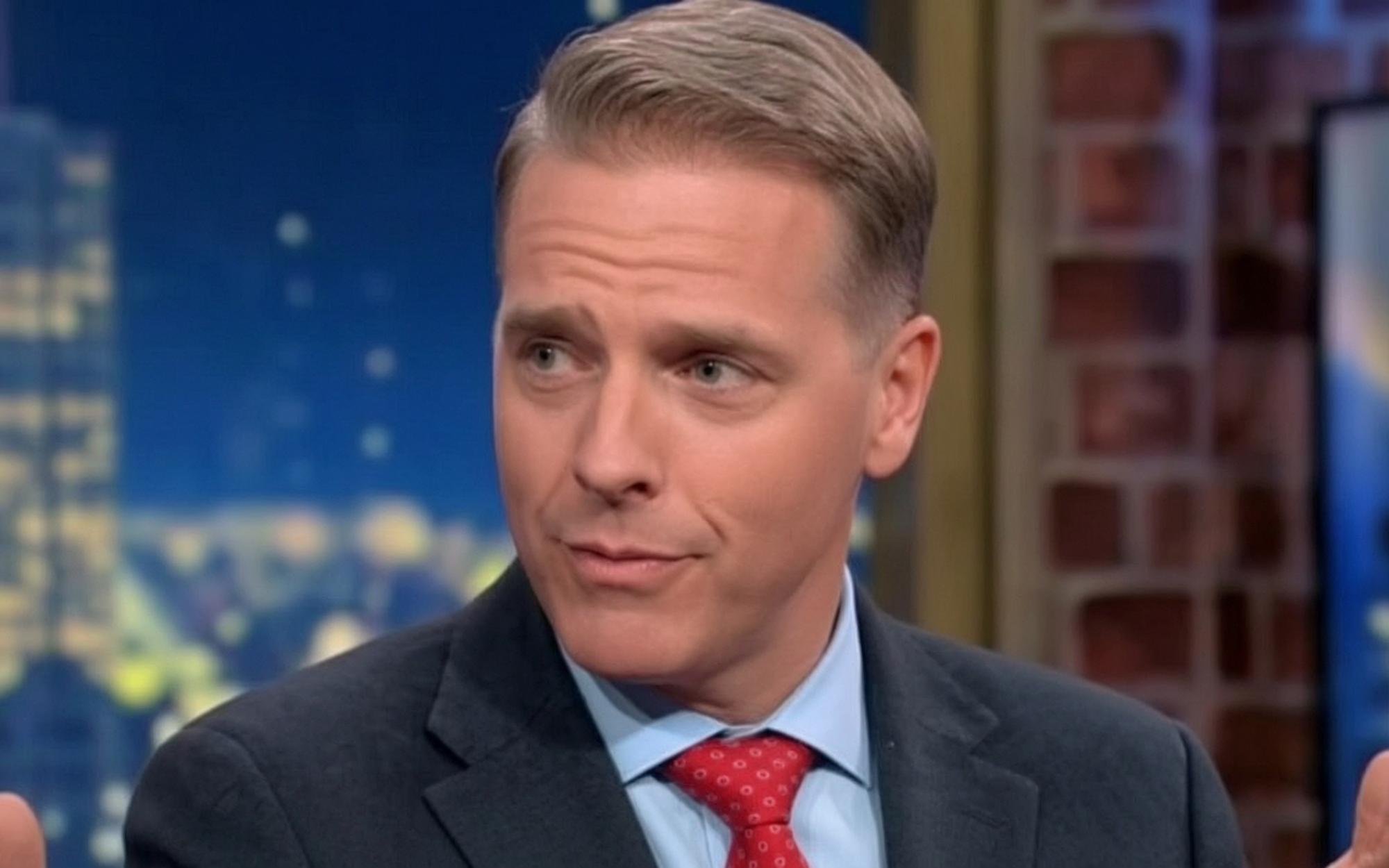
Despite the potential for bipartisan agreement, Cruz said the influence of progressive candidates and activists could make Democratic lawmakers reluctant to participate in negotiations.
"It is not the case that every Senate Democrat is a Marxist or Islamist. What is the case is that every Senate Democrat is terrified of the Marxists and Islamists. Because that’s where the energy is in their party, that’s where the power is, that’s where the money is; it's where the young people are. I think Mamdani is the single most powerful Democrat in the country," Cruz said, referring to New York City Mayor Zohran Mamdani.
Cruz's comments come as progressive candidates backed by the Democratic Socialists of America have gained attention during the 2026 election cycle.
Several candidates have defeated established Democratic incumbents in primary contests.
Among the races Cruz's broader argument encompasses are New York's Darializa Avila Chevalier defeating Rep. Adriano Espaillat, D-N.Y., a longtime member of Congress and chairman of the Congressional Hispanic Caucus, as well as Melat Kiros defeating Rep. Diana DeGette, D-Colo., a 30-year incumbent.
The Democratic Party's leftward movement has also become a point of discussion for Schumer, who has faced questions about the role of the Democratic Socialists of America within the party.
Cruz argued that the pressure facing Democratic lawmakers makes it harder for party leaders to encourage members to pursue bipartisan compromises.
He specifically criticized Schumer's leadership.
"Look, Schumer is known for a lot of things, but acts of principle and courage are not among them," Cruz said.
The debate over permitting reform is expected to continue as lawmakers approach the November midterm elections.
The issue remains one area where supporters believe Republicans and Democrats could find common ground, even as broader political disagreements continue to shape the congressional landscape.
The opinions expressed by contributors and/or content partners are their own and do not necessarily reflect the views of Objectivist. Contact us for guidelines on submitting your own commentary.
Share your opinion
COMMENT POLICY: We have no tolerance for comments containing violence, racism, vulgarity, hard-core profanity, all caps, or discourteous behavior. Thank you for partnering with us to maintain a courteous and useful public environment!