House lawmakers are finally stepping in to stop the slow bleed of military healthcare under the War Department’s latest restructuring schemes.
A draft defense bill currently under review would halt all closures and service reductions at military hospitals and clinics — a move that couldn’t come soon enough for troops and their families tired of Washington’s bureaucratic reshuffling.
The House Armed Services Committee’s personnel subcommittee has proposed language that would prevent the Department of War from carrying through with its years-long plan to downsize dozens of treatment facilities.
The draft version of the Fiscal 2027 National Defense Authorization Act (NDAA) would even compel the War Department to reverse changes already implemented at 41 sites.
Trump's Sovereign Wealth Fund: What Could It Mean For Your Money?
In short, lawmakers are telling the Pentagon brass to pump the brakes and hand over transparency.
The bill would force the Defense Health Agency (DHA) to submit quarterly updates to Congress, giving lawmakers a clear window into any prospective cuts, realignments, or closures that could gut the quality of care for military personnel and their dependents.

The pushback comes seven years after a major reorganization of the military health system was enacted through the Fiscal 2017 NDAA.
FREE Gun Law Map: Laws Don't Pause During Social Unrest
The original goal was bureaucratic efficiency — transferring hospital operations to the DHA, reducing administrative overlap, and focusing more resources on preparing combat medics and surgeons for war. It sounded good on paper.
But in practice, those reforms produced exactly what many critics feared: empty waiting rooms, fewer patients, and doctors losing hands-on experience.
Senior enlisted leaders have repeatedly sounded the alarm that the stripped-down model has left military physicians without enough case volume to maintain readiness-level proficiency.
By 2020, the plan had already cut or consolidated 48 facilities, with some hospitals stripped down to basic ambulatory centers that no longer served retirees or dependents.
MORE NEWS: New Evidence Shakes the Carnival Cruise Murder Case as DNA From Unknown Minor Adds Twist [WATCH]

The intent was to push non-active-duty patients into the private sector with government-paid coverage, but that scheme imploded as private networks grew overstretched and military families faced longer drives for basic care.
Even the War Department ultimately admitted the strategy wasn’t working. Late last year, it reversed course, promising to bring 7 percent of patients back under military care by 2026. Officials also paired up with local hospital systems to make sure that military doctors maintain sharp trauma and surgical skills through civilian rotation programs.
Still, members of Congress from both parties have grown frustrated by the Department’s evasive communication.
Lawmakers say they’ve been kept in the dark about facility downsizing and patient transfer plans at major installations, including West Point’s Keller Army Community Hospital and Fort Leonard Wood’s new “hospital” that was opened as a glorified clinic.

That sort of quiet transformation by bureaucratic decree didn’t fly with the subcommittee.
The new draft measure specifically prohibits carrying through with the 41 targeted reductions and obliges the DHA to restore staffing and services to their March 2026 levels. It’s an institutional reset — and a warning shot to the top brass.
Among the targeted sites are key facilities across the Army, Navy, and Air Force, including the Eisenhower Army Medical Center at Fort Gordon and Naval Hospital Beaufort in South Carolina.
Others on the chopping block include Air Force medical groups from Georgia to California that, under the War Department’s original plan, would have scrapped nutrition, chiropractic, or pediatric services altogether.
The proposal also protects the Desert Sage Community-Based Medical Home at Fort Bliss, previously earmarked for shutdown, which would have cut care for an already-overburdened soldier population. Under this bill, that plan is officially on hold.
Notably, even some War Department officials are trying to downplay the chaos. Dr. Stephen Ferrara, formerly the acting Assistant Secretary for Health Affairs, said last fall that “no list” of closures existed, calling the review process nothing more than “good governance.”
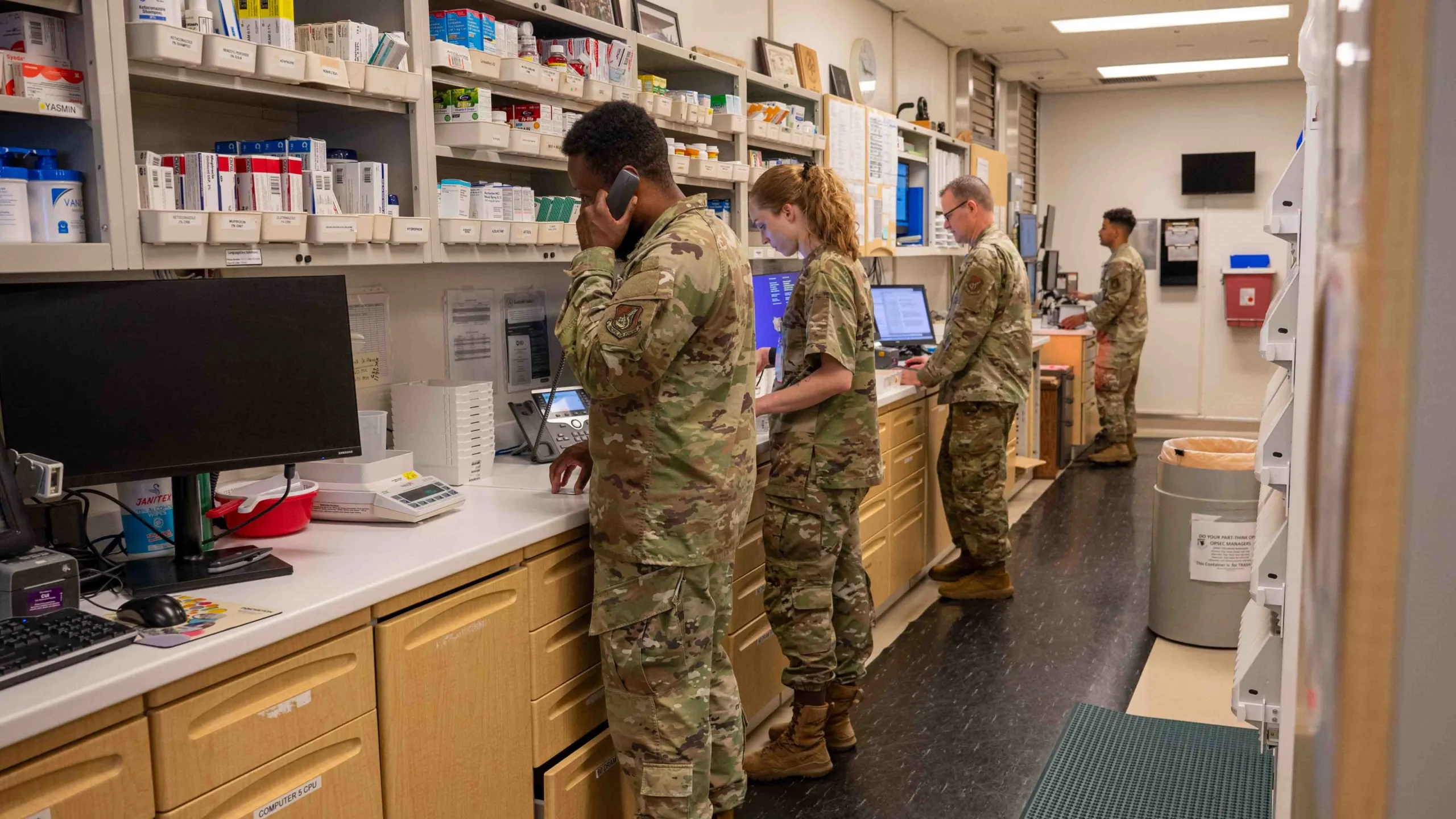
Lawmakers didn’t buy it, and neither should the military families who’ve watched base hospitals shrink while bureaucrats talk about “supply and demand mismatches.”
Groups representing troops and veterans have also been pressing Congress to ensure that data, not red tape, guide the reforms.
Karen Ruedisueli of the Military Officers Association of America said the organization wants “rigorous, data-based analysis and mitigation planning” before any further shifts to civilian care take place. Translation: stop experimenting on the military’s medical system.
The House Armed Services Committee plans to finalize the NDAA markup later this week, sending it to the full House floor for debate. The Senate will tackle its version next week, though that chamber has kept its draft language under wraps.
If this bill clears committee and becomes law, it would mark a rare and long-overdue course correction — one that prioritizes readiness and troop care over bureaucratic “efficiency.” For once, the Capitol might actually be saving something worth protecting.
And at a time when America’s fighting forces need every bit of strength and preparation possible, halting the health care cut parade is not just smart policy, it’s mission essential.
The opinions expressed by contributors and/or content partners are their own and do not necessarily reflect the views of Objectivist. Contact us for guidelines on submitting your own commentary.
Share your opinion
COMMENT POLICY: We have no tolerance for comments containing violence, racism, vulgarity, hard-core profanity, all caps, or discourteous behavior. Thank you for partnering with us to maintain a courteous and useful public environment!